
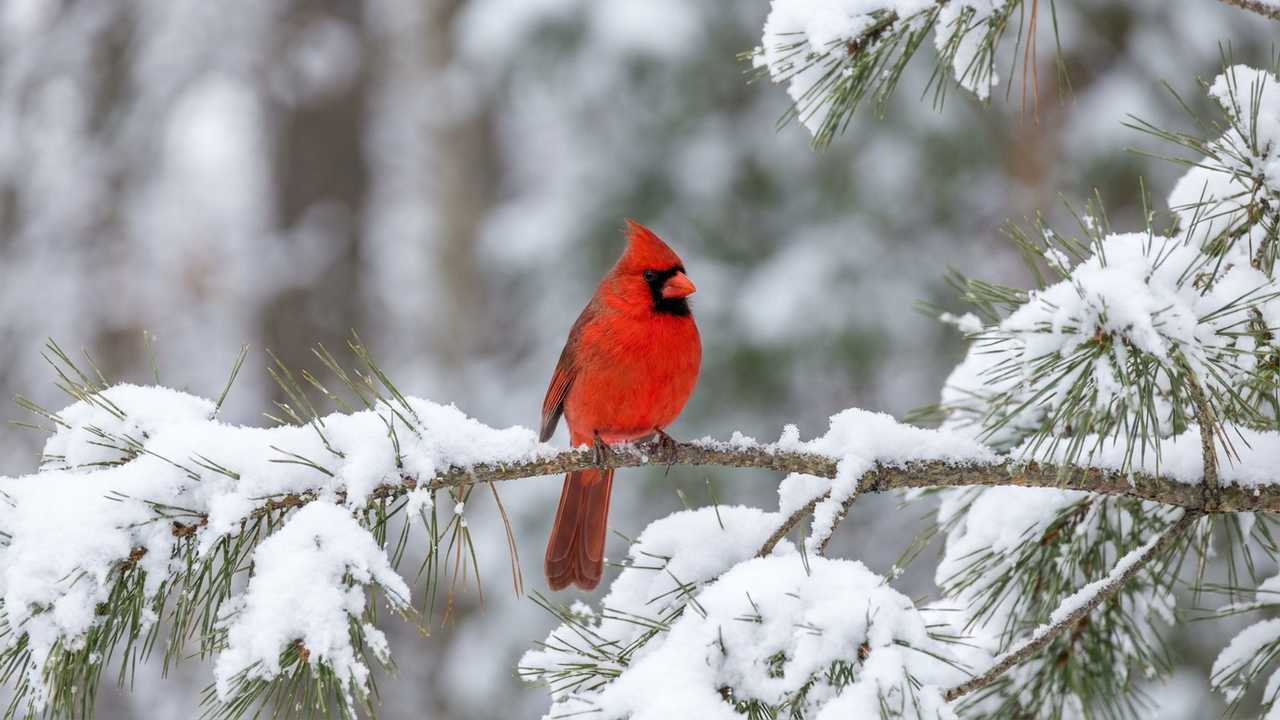
Cardinals are crested songbirds whose brilliant plumage and year-round presence have made them one of the most emotionally charged symbols in North American life, and above all they symbolize hope, renewal, and the enduring presence of love. When people ask what do cardinals symbolize, they are usually reaching for something bigger than birdwatching: they want to know why a flash of red at the feeder feels like a message, why a cardinal outside the window after a funeral feels like a visit, and why the same small bird appears on so many sympathy cards, memorial ornaments, and family stories.
This guide covers the symbol from every angle that matters. It explains the core meanings, the difference between male and female cardinal symbolism, the spiritual and religious traditions that shaped the bird’s reputation, how different cultures read it, what a sighting means in specific situations, where the word “cardinal” itself comes from, and the misconceptions that get repeated online. By the end, you will understand not just one meaning but the full range of meanings attached to this bird, and you will know which ones are grounded in tradition and which ones are modern folklore.
What Cardinals Symbolize at Their Core
At its core, the cardinal symbolizes vitality, hope, and renewal, because it stays vividly colored and keeps singing through the coldest, darkest months of the year. That single fact explains almost everything else. Where most songbirds either migrate south or fade into dull winter plumage, the northern cardinal remains bright red and continues to sing on gray January mornings. To generations of observers, that combination of color and voice in a dead season became a symbol of life persisting when everything else looks finished.
The bird’s behavior reinforces the message. Cardinals do not migrate. They hold territory year-round, which makes them a symbol of staying put, of loyalty to a place, and of faithfulness through difficult seasons. A pair of cardinals nesting in the same hedge year after year reads as commitment. A male singing from a bare branch in February reads as courage. A female perched quietly nearby reads as steadiness.
Four core meanings come out of this behavior and reappear again and again in cards, poems, and family stories:
- Hope and renewal: red plumage and song in winter suggest that life continues and that a new season is coming.
- Vitality and passion: the deep red pigment reads as energy, love, and strong feeling.
- Faithfulness and loyalty: year-round residency and strong pair bonds suggest constancy.
- A messenger’s presence: the bird’s habit of appearing close to homes, often at windows and feeders, gives it a role as a bearer of news or comfort.
Notice that none of these meanings require any religious framework. The symbolism works on a purely natural level first, and everything else builds on that foundation.
The Meaning Behind the Cardinal’s Red Feathers
The male cardinal’s red plumage symbolizes passion, visibility, and confident energy, while the female’s softer tawny plumage symbolizes quiet strength and hidden beauty, and the contrast between them is one of the most important parts of the bird’s symbolism. People who only picture a bright red bird are picturing the male. The female is genuinely different in appearance, and traditions grew up around that difference.
The red color itself comes from carotenoid pigments in the diet. A male that eats well and is in good health produces a richer red, so the color is effectively an advertisement of condition. That biology feeds the symbolism directly: red signals strength, and a dull male signals a bird under stress. Observers noticed this long before anyone measured pigments.
| Form | Appearance | Symbolic Reading |
|---|---|---|
| Adult male | Bright, saturated red with a black mask and crest | Passion, courage, visibility, confident energy |
| Adult female | Tawny gray-brown with red tinges on wings, tail, and crest | Quiet strength, discernment, hidden beauty, endurance |
| Juvenile | Brownish overall with a dark bill that later turns coral | Growth, potential, the unfinished self |
| Leucistic bird | Pale or patchy white plumage | Rarity, wonder, the unusual blessing |
A useful practical example: a family that lost a grandmother who was known for being reserved and strong-willed often reports that the female cardinal, not the male, became “her” bird. The symbolism follows the appearance. The showy male belongs to meanings of passion and announcement; the understated female belongs to meanings of steady, unglamorous strength.
Cardinals in Spiritual and Religious Traditions
In popular Christian folk belief, a cardinal symbolizes a visit from a departed loved one or a message of comfort from heaven, and this is the single most common spiritual meaning people attach to the bird today. It is worth stating plainly that the cardinal is not named in the Bible and has no official role in Christian scripture or liturgy. The meaning comes from folk tradition, from the bird’s red color and its habit of appearing near homes in quiet moments, and from the emotional needs of grieving families.
The older religious layer is linguistic rather than scriptural. Catholic cardinals are senior church officials whose scarlet robes gave the bird its English name. That connection gives the cardinal a secondary religious reading of authority, devotion, and sacrifice, and it is the reason the bird carries an air of seriousness that, say, a finch does not.
Beyond Christianity, several traditions read the bird in overlapping ways:
- Messenger archetype: many traditions treat a bird that arrives suddenly and lingers as a carrier of news, encouragement, or a warning to pay attention.
- Ancestral presence: in modern spiritual and New Age practice, a cardinal is often read as a sign that an ancestor is near or that memory is being honored.
- Seasonal rebirth: the red bird in winter maps onto solstice and new-year themes of light returning after darkness.
- Sacred attention: across traditions, an unexpected animal encounter is treated as an invitation to slow down and notice, whatever the specific doctrine.
If you want to hold the spiritual meaning respectfully, treat it as a comfort tradition rather than a doctrine. It functions best when it helps someone grieve or reflect, and it does not need to be proven to be useful.
How Different Cultures Read the Cardinal
Cardinal symbolism differs by culture, and the differences come from two sources: whether the bird is native to the region, and what the color red means locally. The northern cardinal is native to North America, ranging from southern Canada through the eastern and central United States into Mexico and parts of Central America. Outside that range, the meanings people attach to a “cardinal” are actually meanings attached to red birds generally or to the color red itself.
| Region or Tradition | Dominant Reading | What Drives It |
|---|---|---|
| North America | Hope, comfort, a visit from someone who has passed | Year-round red presence near homes |
| Catholic tradition | Devotion, authority, sacrifice | Scarlet robes of church cardinals |
| Chinese and broader East Asian culture | Good fortune, joy, celebration | Red as an auspicious color, not the bird itself |
| European folklore | Passion and vitality, sometimes a warning | Red as love, blood, and danger in one hue |
| Various Indigenous North American traditions | A messenger, an omen worth heeding | Birds as intermediaries between worlds |
| Modern global culture | Personal sign, gratitude, mindfulness | Social sharing of “cardinal moments” |
The negative side deserves a mention because it is real in some places. In parts of European folklore, a red bird at the window could be read as a warning rather than a comfort, and red itself carries danger connotations in many cultures, from stop signs to alarm signals. Most contemporary North American readers never encounter this reading, but if you are writing about the bird for an international audience, do not assume the meaning is universally warm.
What a Cardinal Sighting Means in Everyday Situations
A cardinal sighting symbolizes whatever the moment needs it to symbolize, and the context of the sighting usually determines which meaning feels right. The same bird at the same feeder can read as encouragement, memory, or simple natural beauty depending on who is watching and when.
Here are the situations people ask about most, with honest readings for each:
- A cardinal at the window: most often a territorial or feeding stop, and symbolically a call to pay attention to something close to home. Window visits peak in spring when males defend territory against their own reflection.
- A cardinal after a loss: the classic comfort reading. The bird becomes a stand-in for the person who died, and the sighting becomes permission to feel connected.
- A cardinal in winter: the strongest natural symbolism of the year. Red against snow, song in cold air, and no migration all reinforce the hope and endurance reading.
- A pair of cardinals: a symbol of partnership, loyalty, and balance between visible and quiet strengths.
- A cardinal that keeps returning: interpreted as persistence, a reminder, or a sign to keep going.
- A cardinal that flies into a window: this one deserves a practical note. Bird strikes are a genuine hazard caused by reflective glass, not an omen, and the useful response is to make the window safer with decals or screens.
One realistic scenario shows how flexible the symbolism is. A woman going through a divorce notices a female cardinal on her fence every morning for a week and starts calling it her sign to keep going. Nothing about the bird changed. The meaning came from her situation, the bird’s steadiness, and the plain fact that she needed a reason to look up. That is how symbolism works in real life, and it is why the bird carries so much weight for so many people.
Where the Name “Cardinal” Comes From
The word “cardinal” comes from the Latin cardo, meaning hinge, and it entered English through cardinalis, “pertaining to a hinge,” which became the title for senior church officials on whom major decisions turned. The bird took the name from the red robes those officials wore, not the other way around. Understanding this history explains several unrelated meanings that share the same word.
- Cardinal virtues: prudence, justice, fortitude, and temperance, so called because they are the “hinges” on which a good life turns.
- Cardinal numbers: the counting numbers one, two, three, which answer “how many,” as opposed to ordinal numbers that answer “in what order.”
- Cardinal directions: north, south, east, and west, the four directions on which a compass turns.
- Cardinal sins and cardinal points in rhetoric: older uses that keep the same hinge metaphor alive.
The sports connection surprises people who meet it for the first time. The St. Louis Cardinals in baseball, the Arizona Cardinals in American football, and the Stanford Cardinal in college athletics all carry the name, and the baseball team’s name traces to the deep red of its early stockings rather than to the bird. The bird, the color, the church office, and the sports teams are separate branches of one word, and the shared color is what holds them together.
Common Misconceptions About Cardinal Symbolism
Several popular beliefs about cardinals are simply wrong, and correcting them makes the real symbolism clearer rather than weaker. The bird does not need exaggeration to be meaningful.
- Cardinals do not turn brown in winter. They molt in late summer and keep the same red feathers through the cold months. The reason a winter cardinal looks so striking is that it never lost its color in the first place.
- Not every cardinal is male and red. Females are tawny with red accents, and juveniles are brownish. A duller bird at the feeder is usually a female, not a sick male.
- Females sing too. Both sexes sing, which is unusual among North American songbirds. The female often sings from the nest, and the duets between pairs are one of the most charming facts about the species.
- A cardinal at the window is not automatically a message from the dead. It is a folk comfort tradition, and it is a meaningful one, but it is not a factual sign. The symbolism is real; the claim of a literal message is not.
- “Cardinals mate for life” is an oversimplification. They form strong pair bonds and often stay together across seasons, but pairs do break and re-form.
- The bird was not named for the color first. The color association runs through the church office, which wore scarlet before the bird had its English name.
There is also a state-symbol misconception worth clarifying. Seven states name the northern cardinal their official state bird: Illinois, Indiana, Kentucky, North Carolina, Ohio, Virginia, and West Virginia. That is the largest number of states sharing a single state bird, which says something about how strongly the bird resonates with people.
Frequently Asked Questions About What Cardinals Symbolize
What does it mean when a cardinal visits you?
In the most common reading, a visiting cardinal symbolizes comfort, encouragement, or the nearness of someone you have lost. It also has a plain natural explanation: cardinals live year-round near homes and visit feeders regularly. Both readings can sit side by side without conflict.
Is the cardinal a symbol of death or bad luck?
No, not in mainstream North American tradition, where the bird is almost always positive. Some older European folklore treats a red bird at the window as a warning, and some people read any red animal as a caution, but the dominant modern meaning is hope and comfort rather than misfortune.
What does a red cardinal mean spiritually?
Spiritually, the red cardinal most often represents vitality, love, and a message from the other side. The red is read as passion and life force, and the bird’s year-round presence is read as faithfulness. Different traditions emphasize different parts, but the theme of enduring life runs through all of them.
What is the difference between a male and female cardinal symbolically?
The male’s bright red symbolizes passion, courage, and visibility. The female’s muted tawny plumage symbolizes quiet strength, discernment, and hidden beauty. Families often choose one or the other to represent a specific person.
Do cardinals appear more often after a death?
They appear more often in winter, near feeders, and in the early morning, which are also the moments when grieving people tend to be awake and watching. The perception of increased appearances is real in human terms even though the bird’s behavior has not changed.
Why is the cardinal associated with Christmas?
The bird’s red plumage against snow and its year-round presence make it a natural symbol of winter warmth and returning light. The association grew through cards, ornaments, and popular songs rather than through any formal religious designation.
Can a cardinal be a symbol of good luck?
Yes, in the general sense that an unexpected animal encounter is widely read as a positive sign. Cultures that treat red as auspicious, including Chinese tradition, read a red bird as a lucky omen, though the northern cardinal itself is not native to those regions.
Final Thoughts on Cardinal Symbolism
The cardinal means what it has always meant: life that refuses to go quiet. Its red feathers, its winter song, its year-round territory, and its habit of living close to people all combine into a symbol of hope, loyalty, vitality, and presence. The spiritual layer, the folk belief about visiting loved ones, and the cultural readings around the world all grow from that natural foundation rather than replacing it.
That is also why the symbol keeps working. You do not have to believe anything specific to feel something when a cardinal lands on a bare branch in January. Whether you read it as a sign, a memory, a lucky moment, or simply a beautiful bird, the sighting does the same useful thing: it makes you stop, look up, and pay attention. Keep a feeder stocked, learn the female’s softer plumage so you can recognize her, and let the next cardinal you see mean whatever your season needs it to mean.