
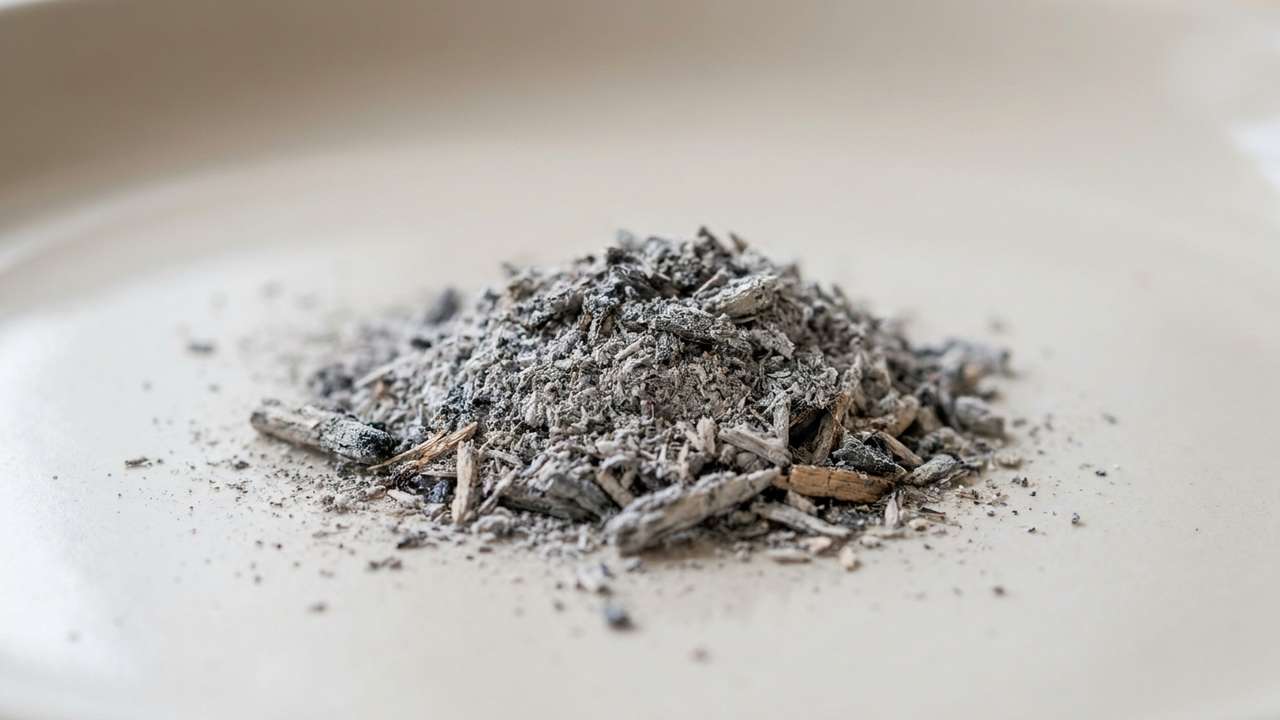
Ashes symbolize mortality, transformation, and remembrance, because they are the powdery residue that survives after fire destroys a physical form. A burned log, a cremated body, a scorched field, and a volcano’s gray fallout all leave the same substance behind, and every human culture has read meaning into it. When people ask what do ashes symbolize, they are usually asking a bigger question: what survives when something is gone, and what should we do with what is left.
This guide covers the full symbolic range of ashes, from the ancient memento mori tradition to Ash Wednesday, from Hindu cremation rites to the modern keepsake urn. It also explains how the meaning shifts depending on the type of ash, the culture doing the interpreting, and the emotional situation of the person holding it. By the end, you will understand not only the general symbolism but also the specific meanings that apply to grief, religion, art, and everyday life.
Definition and Core Meaning of Ashes as a Symbol
Ashes are the mineral and carbon residue that remains after combustion. As a symbol, ashes represent the end of one form and the raw material of another, which is why they sit at the crossroads of death and renewal in almost every symbolic system on earth.
Ashes symbolize mortality, transformation, and remembrance, and virtually every culture in the world reads those three ideas into them. The substance itself is neutral. The meaning comes from the contrast it creates: fire takes everything visible and leaves something formless, gray, and light enough to scatter on the wind.
The Physical Object and the Symbol It Carries
Ash is what fire cannot consume. That simple physical fact drives most of the symbolism. Wood burns down to mineral powder that still contains potassium and calcium, and farmers have spread it on fields for thousands of years because it feeds new growth. A human body reduces to bone fragments that a crematorium processes into a fine grit, and families keep that grit in urns or scatter it at meaningful places. In both cases, the ash is a leftover that still does something.
The symbol therefore carries two opposite charges at the same time. Ashes mean ending, and ashes mean beginning. Writers call this the phoenix pattern, after the Greek myth of a bird that burns itself and rises from its own remains. The image works because it matches what people actually see when a fire passes through a forest: black ground in spring, green shoots by summer.
Three Meanings Every Culture Shares
- Mortality: ashes remind people that living forms end, which is why they appear in funeral rites and memento mori art.
- Transformation: ashes mark a completed change, the state between what burned and what comes next.
- Remembrance: ashes give grief a physical object to hold, bury, scatter, or display.
Everything else in this article builds on those three meanings. The differences between cultures come from which meaning each tradition emphasizes and what ritual it wraps around the ash.
Ashes as a Symbol of Mortality and Impermanence
The most common meaning of ashes is mortality. Ashes symbolize the frailty of the human body and the shortness of life, and this is the meaning most readers are looking for when they encounter ashes in literature, art, or religious practice.
Christians in many traditions receive a cross of ashes on the forehead on Ash Wednesday, the start of Lent. The words spoken during the imposition come from Genesis 3:19: “Remember that you are dust, and to dust you shall return.” The ritual is not about despair. It is about perspective, a deliberate yearly reminder that status, wealth, and reputation do not survive the body.
The Memento Mori Tradition
European painters in the sixteenth and seventeenth centuries placed skulls, hourglasses, and burned-out candles in still-life paintings to remind viewers that life ends. Ashes appeared in those works as the final stage of a candle or a pipe, the visible proof that something had been consumed. The tradition borrowed from older Roman practice, where a servant is said to have whispered a reminder of mortality to generals during triumphs.
Modern memento mori culture carries the idea forward in quieter forms. A jar of a parent’s ashes on a shelf does the same work as a painted skull: it puts the end of life in plain view and asks the living to act accordingly.
How the Mortality Meaning Shows Up in Language
- “Ashes to ashes, dust to dust” comes from the burial service in the 1662 Book of Common Prayer and remains one of the most recognized phrases in English funerary language.
- “Sackcloth and ashes” describes public grief or repentance, a phrase rooted in ancient Near Eastern mourning customs.
- “Reduced to ashes” means total destruction, and it applies to buildings, reputations, and plans alike.
- “Rise from the ashes” means recovery after ruin, and it borrows directly from the phoenix myth.
The language matters because it shows how deep the mortality reading runs. English speakers use ash metaphors for death, defeat, repentance, and comeback without noticing that they are all the same image.
Cultural Meanings of Ashes Around the World
Ashes carry different meanings in different cultures, and those meanings range from the sacred to the feared. A single substance produces a Hindu pilgrimage, a Jewish day of mourning, a Christian penitential season, and a secular scattering ceremony on a beach.
The unifying thread is that cultures treat ashes as a bridge between the dead and the living. The differences lie in what each tradition believes happens after death and how much contact with the remains it permits.
| Culture or Tradition | What Ashes Mean | Typical Practice |
|---|---|---|
| Christianity | Repentance, humility, mortality | Ashes imposed on the forehead at the start of Lent |
| Judaism | Mourning, destruction, humility before God | Fasting and mourning on Tisha B’Av, the remembrance of the Temples’ destruction |
| Hinduism | Release of the soul, purification, the cycle of rebirth | Cremation and immersion of ashes in a sacred river such as the Ganges |
| Buddhism | Impermanence, detachment, continuation | Cremation with relics and ashes placed in stupas or memorial halls |
| Islam | Return to the earth, but not through fire | Burial without cremation, since Islamic law generally prohibits burning the body |
| Ancient Greece and Rome | The shade’s release, honor for the dead | Cremation on a pyre and collection of bones and ash in an urn |
| Japan | Continuity of the family line, respect for ancestors | Cremation followed by interment in a family grave |
| Secular Western | Personal memory, freedom, closure | Scattering at a meaningful place or keeping a portion in jewelry |
Where the Meanings Clash
Cremation and ash handling divide cultures sharply, and this is where readers most often get confused. Islam and traditional Judaism both favor burial and treat cremation as a departure from religious law, so ashes do not function as a religious symbol in those traditions the way they do in Hinduism or Christianity. In Hindu practice, the ashes are typically immersed in a sacred river within a set period after cremation, and the ritual marks the soul’s release rather than the body’s preservation. In Japan, the family keeps the ashes close and later places them in a grave that links generations.
A reader who assumes ashes mean the same thing everywhere will misread the symbol. The safest rule is to ask which tradition is speaking before assigning a meaning.
Religious and Spiritual Symbolism of Ashes
Ashes symbolize repentance, purification, and sacrifice in most religious systems, and the substance appears in scripture, liturgy, and devotional practice across several faiths. Fire destroys, but it also cleanses, and ash is the visible evidence that the cleansing happened.
The Hebrew Bible contains numerous passages where people put on sackcloth and sit in ashes to express grief or repentance. The Book of Jonah describes the king of Nineveh covering himself with sackcloth and sitting in ashes after a warning of judgment. The image is deliberately uncomfortable: ash is dirty, it clings to skin, and it makes the wearer look like what they feel like.
Purification and Sacred Ash
Hindu practice treats sacred ash, known as vibhuti or bhasma, as a substance that carries blessing. Devotees of Shiva apply it to the forehead and arms, and the ash serves as a reminder that the body returns to dust and that the divine is what remains. The practice is devotional rather than mournful, which surprises many outside observers who associate ash only with death.
Several Catholic and Orthodox traditions use ashes blessed from the previous year’s palm branches. The blessing turns a waste product into a sacramental, and the transformation mirrors the seasonal theme of repentance turning into renewal.
Resurrection and Rebirth
- Christian symbolism links ash with the resurrection promise: the body returns to dust, and the faith teaches that dust will be raised.
- Hindu and Buddhist symbolism links ash with the continuation of the soul or consciousness through rebirth or liberation.
- Ancient Egyptian and Mediterranean traditions sometimes connected ash with the afterlife journey, though mummification limited its role in Egypt.
- The phoenix myth, adopted by early Christian writers, used the bird rising from ashes as an image of resurrection.
The spiritual reading of ashes is therefore optimistic underneath the somber surface. Almost every religion that uses ash uses it to say that the end of the physical form is not the end of the story.
Ashes in Grief, Memory, and Modern Mourning
Ashes symbolize memory in modern mourning practice, and they give grief a physical object that families can hold, carry, or place somewhere meaningful. This is the meaning most people encounter today, since cremation has become one of the most common forms of disposition in many countries.
When a family chooses cremation, they receive a container of ashes and an immediate practical question: what now? That question is symbolic as much as logistical. Keeping the ashes at home, dividing them among siblings, scattering them at a favorite place, or turning a portion into memorial glass all express different relationships with the person who died.
What Families Actually Do With Ashes
- Interment: the ashes go into a cemetery plot, columbarium niche, or church garden.
- Scattering: the family releases the ashes at a place the person loved, often a coastline, mountain, or garden.
- Keeping: the ashes stay in an urn at home so the family can visit without traveling.
- Dividing: multiple family members each keep a small portion, a practice that some traditions allow and others discourage.
- Transformation: a portion of the ashes is set into glass, metal jewelry, or tattoo ink as a permanent keepsake.
A Practical Scenario
Consider a family that lives in three different cities after a parent dies. The parent loved a particular stretch of coastline. The family arranges to meet there, scatters most of the ashes together, and each sibling keeps a small amount in a simple container. The ceremony is not religious in any formal sense, but it does exactly what every ash ritual does: it turns an abstract loss into a shared physical act that the family can remember precisely.
Grief counselors often note that the ritual matters more than the location. What ashes symbolize in that moment is not death but continuity of relationship, and the ceremony gives the family permission to keep talking about the person.
Variations: How the Meaning Changes With the Type of Ash
The meaning of ashes changes with the source of the ash, and readers often conflate several different substances under one word. Wood ash, volcanic ash, cigarette ash, cremation ash, and metaphorical ash each carry a distinct symbolic charge.
| Type of Ash | Primary Symbolism | Context |
|---|---|---|
| Wood and hearth ash | Home, survival, fertility, humility | Fertilizer, soap making, fireplace rituals |
| Volcanic ash | Overwhelming power, destruction, eventual fertility | Natural disaster imagery, soil renewal after eruptions |
| Cremation ash | Grief, memory, continued presence | Funeral rites, scattering, keepsakes |
| Cigarette ash | Habit, wasted time, self-destruction | Literature, film, and addiction imagery |
| Burned documents and letters | Closure, secrecy, erasing the past | Personal ritual, breakups, political cover-ups |
| Metaphorical ash | Ruin and the possibility of rebuilding | Language, politics, and business recovery narratives |
Wood Ash and the Everyday Sacred
Wood ash carries a quiet domestic symbolism that most people overlook. The hearth was the center of the home for centuries, and the ash left after a fire meant warmth had been provided and food had been cooked. Wood ash also has real uses: it supplies potassium and calcium to soil, and it was historically the source of lye for soap and of potash for glass and fertilizer. When a culture treats the family hearth as sacred, the ash becomes a relic of the home itself.
Volcanic Ash and the Awe Response
Volcanic ash symbolizes forces that no human can control. The same ash that buried Pompeii also left some of the most fertile farmland in Italy, and that double meaning shapes how people read it. Volcanic ash in a photograph reads as apocalypse. Volcanic ash in an agricultural report reads as next year’s harvest. The symbol holds both readings at once.
Cigarette Ash and the Wasted Life
Cigarette ash carries a negative charge in most contexts. Writers use it to signal self-destruction, wasted hours, and a life burning down. The ashtray is a common prop in noir fiction for exactly this reason. Unlike hearth ash, which implies survival, cigarette ash implies consumption with nothing gained.
Common Misconceptions About Ashes
Several popular beliefs about ashes are inaccurate, and correcting them helps readers understand the symbol more precisely. Symbolism and physical fact often drift apart, and the gap causes confusion.
- Misconception: ashes are the whole body in powdered form. In reality, cremation ash consists mainly of bone fragments processed into grit, and it contains no soft tissue.
- Misconception: ashes must be scattered to be meaningful. Keeping ashes at home, burying them, or placing them in a columbarium are equally valid and equally symbolic.
- Misconception: ashes carry bad luck or spiritual danger. Most traditions treat them as sacred rather than dangerous, though some folk customs do advise care with remains.
- Misconception: all religions forbid cremation. Islam and traditional Judaism favor burial, but Hinduism, Buddhism, and most Christian denominations permit cremation.
- Misconception: ashes always mean death. Wood ash, volcanic ash, and metaphorical ash have nothing to do with human death.
The most important correction is the second one. People who feel guilty about not scattering a loved one’s ashes should know that the symbol lives in the attention paid, not in the location chosen.
Frequently Asked Questions About Ashes
What do ashes symbolize in the Bible?
In biblical texts, ashes symbolize mourning, repentance, and human frailty. People sit in ashes, wear them, or sprinkle them on the head to express grief, and the image of dust returning to dust underlines human mortality.
What do ashes symbolize in a dream?
Dream imagery involving ashes commonly points to endings, regret, or the aftermath of something that burned out. The general symbolic meaning is transformation after loss, though dream interpretation is personal and cultural rather than universal.
Do ashes symbolize rebirth?
Yes. The phoenix myth, Christian resurrection imagery, and the agricultural cycle all use ashes as a sign that new life follows destruction. This is the most hopeful reading of the symbol.
What do ashes symbolize at a funeral?
At a funeral, ashes symbolize the finality of the physical body and the continuation of memory. They give mourners a tangible focus for grief, whether the ashes are buried, scattered, or kept.
What does it mean when someone says “ashes to ashes”?
The phrase comes from the Christian burial service and means that the body returns to the earth from which it came. People use it today as a general statement about mortality and humility.
Are ashes considered unlucky in any culture?
Some folk traditions treat disturbed ashes or ash from a burned home as an ill omen, but these are local superstitions rather than mainstream religious teachings. Most major traditions regard ashes as sacred or neutral.
Conclusion
Ashes symbolize mortality, transformation, and remembrance, and every culture that uses them emphasizes one of those three meanings over the others. The same gray powder can mark repentance at the start of Lent, release a soul in a sacred river, hold a family’s memory on a shelf, or stand for a ruined city that might rebuild. What matters is not the substance but the meaning people attach to it.
Understanding what ashes symbolize gives readers a clearer language for grief, a better grasp of religious practice, and a sharper eye for the ash metaphors that appear constantly in books, films, and conversation. The next time you see ash, whether in a fireplace, a church, or an urn, you will know it carries something far older than fire.