
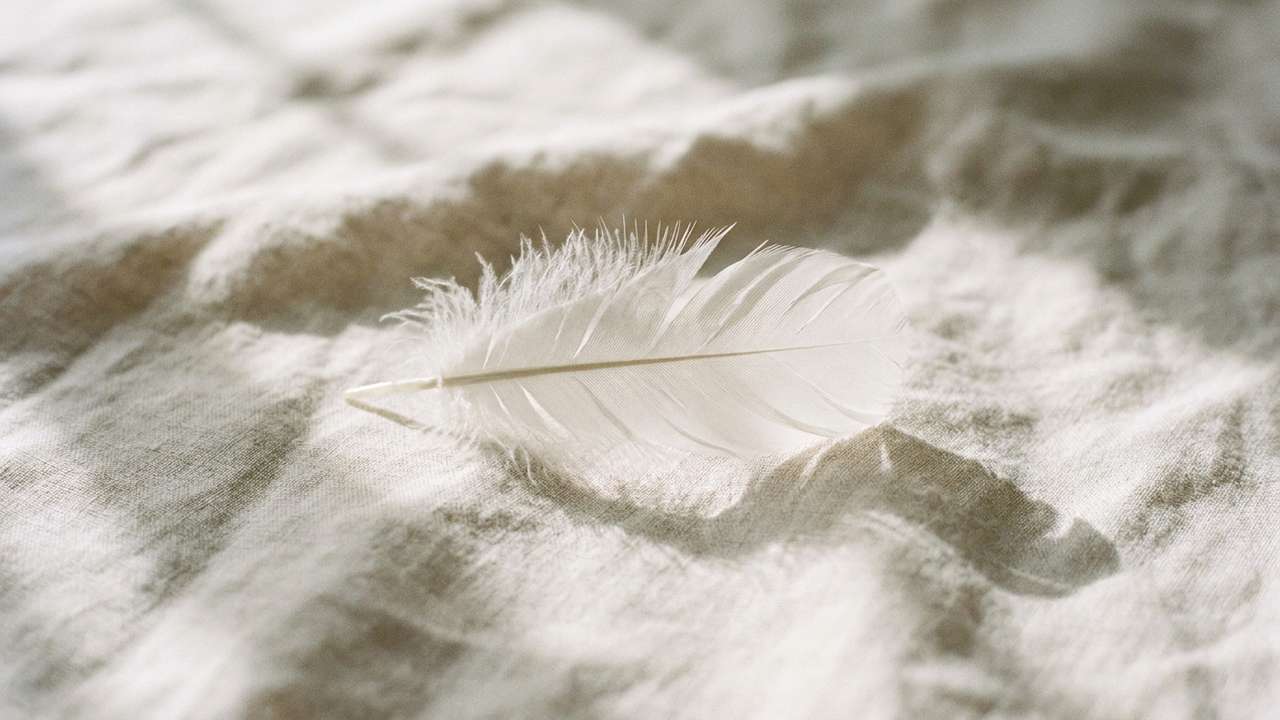
A feather symbolizes freedom, spiritual connection, and the ability to rise above the ordinary world, and it carries this core meaning across nearly every culture that has ever found one on the ground. A feather is light enough to be carried by the wind yet strong enough to lift a bird into the sky, and that combination of gentleness and power is exactly why humans have treated it as a sacred object for thousands of years. When people ask what does a feather symbolize, they are usually asking about something they found, something they wear, or something that appeared in a moment when they needed a sign.
This guide answers that question completely. You will learn the core meaning of a feather, how that meaning changes across cultures and religions, what each feather color represents, what a feather means in everyday situations like finding one on a walk or choosing a tattoo, how feathers differ from wings, and which popular beliefs are simply not supported by tradition. By the end, you will be able to read a feather’s meaning with confidence instead of guessing.
Feather Symbolism: The Core Meaning Explained
A feather symbolizes freedom, transcendence, and a message carried between the earthly world and the spiritual one. That single sentence sits at the center of almost every feather tradition on earth. The feather is the tool of flight, so it represents the ability to move beyond limits. It falls from a bird that lives in the sky, so it represents something descending from a higher place to reach a person below. It is also shed naturally, which links it to renewal, release, and the natural cycle of letting go of what is no longer needed.
Birds molt, meaning they drop old feathers and grow new ones. Across many traditions, this made the feather a natural symbol of change and second chances. A feather on the ground is never a failure. It is proof that something moved forward.
The Feather as a Symbol of Flight and Freedom
Flight is the oldest and most universal feather meaning. Humans watched birds cross oceans and climb above storms, and they attached that freedom to the feather itself. In this reading, a feather stands for independence, perspective, and the courage to leave a situation that no longer fits.
The Feather as a Bridge Between Worlds
Because a feather travels between the ground and the sky, it became a bridge symbol. It represents messages, guidance, and the idea that something larger is paying attention. This is why feathers appear in rituals of prayer, blessing, and communication in cultures that are otherwise completely unrelated to one another.
The most common core meanings of a feather are:
- Freedom and the ability to rise above difficulty
- Spiritual messages and divine guidance
- Lightness, hope, and emotional release
- Renewal, growth, and the natural cycle of change
- Connection between the physical world and the spiritual world
- Honor, courage, and earned status in many Indigenous traditions
Feather Symbols Across Cultures and Traditions
Feather meaning differs sharply by culture, and this is where most online explanations get lazy. There is no single global feather meaning. There is a family of meanings that overlap in some places and contradict each other in others. Understanding the cultural source of a feather symbol is the only way to read it honestly.
Where Feather Symbolism Began
Feather symbolism is older than written history. Decorated feathers appear in prehistoric burials and cave art, and birds were among the first animals humans linked to the sky gods. In ancient Rome, official priests called augurs read the flight and behavior of birds to determine whether the gods approved of a decision. The Latin word auspicium, meaning the observation of birds, is the direct ancestor of the modern word auspicious. In other words, the entire idea of a good omen comes from watching birds and their feathers.
How Different Cultures Read a Feather
| Tradition | Primary Feather Meaning |
|---|---|
| Ancient Egypt | The goddess Maat wore an ostrich feather that stood for truth and justice. During the Weighing of the Heart ceremony, a person’s heart was weighed against her feather, and a heart lighter than the feather meant a virtuous life. |
| Indigenous nations of North America | Eagle feathers are sacred and are earned through honorable deeds. Plains nations historically awarded feathers for bravery and used them in war bonnets and ceremonies. Traditions vary greatly from nation to nation. |
| Ancient Greece and Rome | Winged figures such as Hermes and Nike carried messages and victory. Bird flight was read as a sign from the gods. |
| Celtic and Gaelic folklore | Feathers were linked to the Otherworld, to transformation, and to messages from spirits. Certain birds were treated as messengers between worlds. |
| China | The feather of the fenghuang, or phoenix, represents virtue, renewal, and harmony. It is a sign of rare goodness rather than a casual omen. |
| India | The peacock feather is associated with Krishna and with beauty, devotion, and protection. Garuda, the eagle mount of Vishnu, carries feathers as symbols of divine speed and power. |
| Japan | The crane is linked to longevity and fidelity, and feathers in general suggest lightness, grace, and the fleeting nature of beauty. |
| Hawaii | Feather cloaks and helmets called ahuula were made for ali’i, the chiefly class. Feathers there represented rank, sacred power, and protection. |
Notice the pattern. Cultures that prized courage read a feather as honor. Cultures that prized wisdom read it as truth. Cultures that prized connection to the spirit world read it as a message. A feather takes on the values of the people holding it.
Feather Symbolism in Religion and Spirituality
Feather meaning in religion is specific and traceable. Each major tradition attaches the feather to a defined idea rather than to vague good energy, and knowing the source keeps the symbol accurate.
- Christianity. Psalm 91 describes God covering people with his feathers as a picture of protection. Angel wings in Christian art reinforce the feather as a symbol of divine guardianship and closeness to heaven.
- Islam. Angels are described in Islamic tradition as beings with wings, and feathers therefore signal the unseen world, protection, and the delivery of divine messages.
- Hinduism. Garuda carries Vishnu through the sky, and the peacock feather rests in Krishna’s crown. Here the feather stands for devotion, protection, and divine beauty.
- Buddhism. In Tibetan practice, peacock feathers are used to sprinkle blessed water during rituals, connecting the feather to purification and blessing.
- Contemporary spirituality. Many modern readers treat a found feather as a sign from an angel, a spirit guide, or a loved one who has passed. This is a newer layer built on older ideas rather than an ancient doctrine.
The honest summary is this: the religious feather is a symbol of protection and message delivery in nearly every faith, while the specific sender changes with the belief system.
What Feather Colors Symbolize
Feather color meaning is the second most searched part of this topic, and it comes with an important warning. Color associations are not universal. They borrow heavily from modern chakra and New Age systems, which assign meanings to colors rather than to feathers. Use the table below as a practical guide, not as ancient law.
| Color | Common Meaning | Notes |
|---|---|---|
| White | Purity, peace, protection, angelic presence | Also carried a negative meaning in Britain during World War I, explained below. |
| Black | Protection, mystery, deep strength | In some Western folklore it signals an ending or an omen, while in others it is protective. |
| Grey | Balance, neutrality, peace after conflict | Often read as a sign to slow down and reflect. |
| Brown | Grounding, home, humility, hard work | Tied to earth and stability rather than to flight. |
| Blue | Communication, truth, calm, clear expression | Linked in modern systems to the throat chakra. |
| Green | Healing, growth, abundance, new beginnings | Frequently connected to the heart. |
| Red | Passion, courage, vitality, action | Strong energy and forward movement. |
| Yellow or gold | Joy, optimism, prosperity, sunlight | Often linked to confidence and visibility. |
| Purple or violet | Intuition, spiritual insight, higher wisdom | Associated with royalty and the crown chakra. |
| Pink | Love, kindness, gentle affection | Commonly linked to self-love and harmony. |
One practical rule matters more than any color chart. The bird species matters as much as the color. A crow feather and a dove feather can both be dark or light, yet they carry completely different cultural weight. Always ask two questions: what bird, and what color. The pair gives you a much more accurate reading.
Feather Symbolism in Everyday Contexts
Feather meaning shows up in daily life far more often than people expect. The situation surrounding the feather changes the message, and these are the situations readers ask about most.
Finding a Feather
Finding a feather is the most common personal experience tied to this symbol. Most traditions treat a found feather as a message that arrived at the right moment, sometimes described as the feather finding you rather than you finding it. A reasonable way to reflect on it is:
- Note where you were and what you were thinking about
- Note the color and the type of bird
- Connect it to whatever decision or emotion was already on your mind
- Treat it as a prompt for reflection rather than a prediction of events
Feathers in Tattoos and Jewelry
A feather tattoo usually represents freedom, loss, memory, or a personal journey. Many people choose a single feather to honor someone who has died, and others choose a feather breaking into birds to represent release. In jewelry, a feather pendant is worn as a reminder of lightness and protection. The meaning here is chosen deliberately by the wearer, which makes it more personal than any chart can capture.
The White Feather as a Badge of Cowardice
Not every feather meaning is uplifting, and this one deserves a full explanation. During World War I in Britain, beginning in 1914, a campaign organized by Admiral Charles Fitzgerald handed white feathers to men who were not in military uniform, marking them as cowards. The custom echoed an older belief that a fighting cock with white feathers made a poor fighter. That is why the white feather still carries a painful double meaning in Britain, standing for peace and purity in some contexts and for shame in others.
A Practical Example
Imagine a person who has just ended a long relationship and finds a small grey feather on the pavement outside their new apartment. Read through the cultural lens, the bird has shed something and moved on, the color grey points to balance after conflict, and the timing points to transition. Nothing here predicts the future. It simply gives the person a structured moment to notice that change is already happening.
Feather and Wing Symbolism: How They Differ
A feather symbolizes the individual message, while a wing symbolizes the larger power that sends it. People often use the two words interchangeably, but the symbolism is not the same. A feather is small, portable, and personal. It can be held in a hand or tucked into a book. A wing is structural, protective, and collective, and it belongs to a whole being rather than to a single moment.
| Feature | Feather | Wing |
|---|---|---|
| Scale | Small and individual | Large and structural |
| Typical meaning | A message, a sign, a personal reminder | Protection, power, transcendence |
| Cultural example | An earned eagle feather worn for honor | Angel wings as divine guardianship |
| Common use | Found objects, tattoos, jewelry | Art, monuments, religious imagery |
| Emotional tone | Gentle, quiet, intimate | Majestic, commanding, protective |
If you are choosing a symbol for a gift or a personal design, this distinction matters. A feather says something arrived for you. A wing says something is watching over you.
Common Misconceptions About Feather Symbolism
Feather meaning is one of the most oversimplified topics in popular spirituality, and several widely repeated claims do not hold up. Correcting them makes the symbol stronger rather than weaker.
- A feather has one universal meaning. It does not. Egyptian, Lakota, Celtic, Indian, and Japanese traditions give feathers different and sometimes opposite meanings.
- Every color has one fixed meaning. Color charts are modern inventions built on chakra systems. They are useful, but they are not ancient doctrine.
- A found feather always means a deceased loved one is nearby. This is a comforting modern interpretation, not a historical teaching, and it is fine as long as it is understood as personal belief.
- Any feather can be collected freely. In the United States, the Migratory Bird Treaty Act of 1918 makes it illegal to possess the feathers of most native wild birds without a permit, and eagle feathers are further restricted to enrolled members of federally recognized tribes. Admire responsibly.
- A feather is always a good omen. Some traditions treat certain dark feathers as warnings, and the white feather in Britain carries a shame meaning from the World War I campaign.
None of these corrections reduce the beauty of the symbol. They simply move it from vague superstition into real cultural knowledge.
Frequently Asked Questions About Feather Symbolism
What does it mean when you find a feather?
A found feather is generally read as a message, a reminder, or a moment of guidance. Most traditions interpret it as a nudge to pay attention to what is happening in your life right now. The meaning becomes personal through the color, the bird, and the timing rather than through a fixed rule.
What does a white feather symbolize?
A white feather symbolizes purity, peace, protection, and in modern spirituality, an angelic presence or a message from someone who has passed. In Britain it also carries a historical meaning of cowardice because of the World War I white feather campaign, so context matters.
Is a feather good luck or bad luck?
A feather is good luck in most traditions. It is considered a blessing, a message, or a sign of protection. The negative readings are limited to specific cultures and specific colors, such as the white feather in wartime Britain or certain dark-feather omens in a few folk traditions.
Do feather colors really change the meaning?
Yes, but less than most color charts suggest. Color adds a flavor to the message, while the bird species and the situation carry more weight. A blue jay feather and a blue parrot feather are both blue but come from completely different symbolic backgrounds.
What does a feather tattoo mean?
A feather tattoo most often represents freedom, memory, loss, hope, or a personal journey. A single falling feather commonly honors someone who has died, while a feather dissolving into birds represents release and moving forward.
Why Feather Symbolism Still Matters Today
Feather symbolism survives because it answers a need that never goes away. People want to believe that small, quiet things carry meaning, and a feather is the smallest and quietest sign nature offers. It is free, it appears without warning, and it requires nothing but attention. Understanding what a feather symbolizes gives you a way to turn a random moment into a moment of reflection, whether you follow an ancient tradition or simply enjoy the beauty of the object.
The next time a feather lands near you, notice the color, notice the bird if you can, and notice what you were thinking about. You will now read it with more depth than most people ever will. That is the real value of this symbol. It does not tell you your future, it invites you to look more closely at your present.