
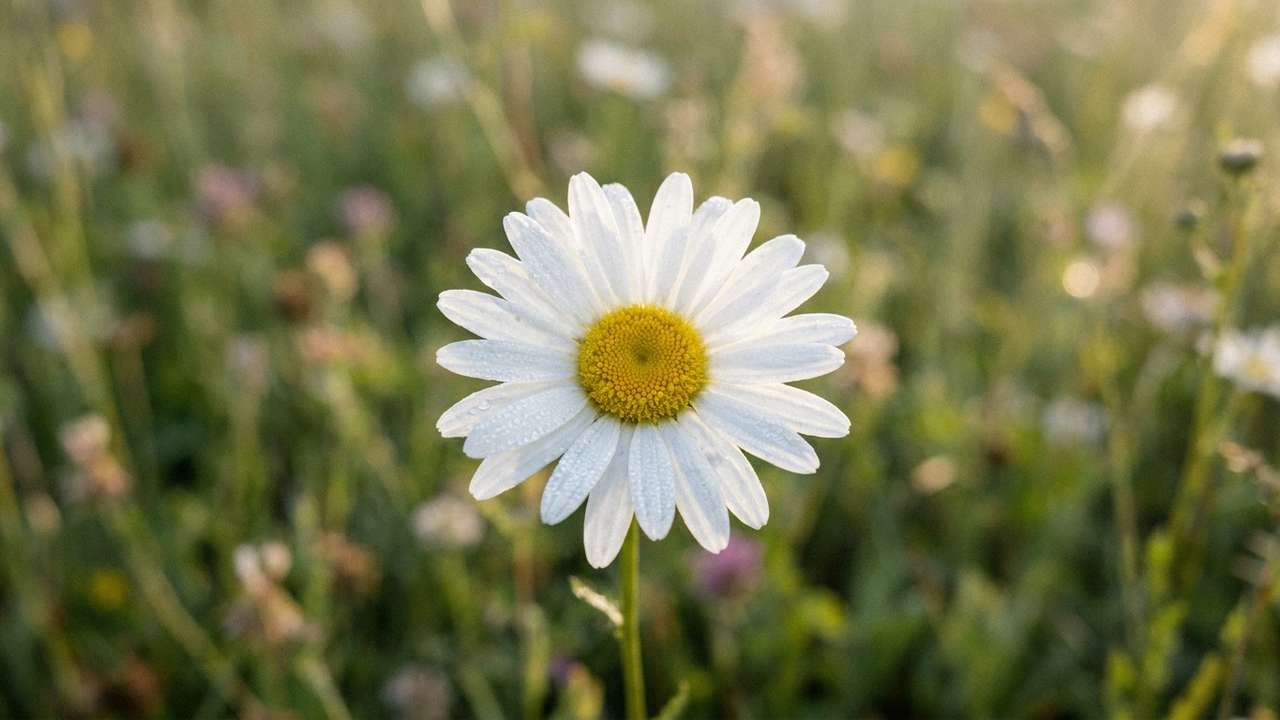
The daisy is a small, cheerful composite flower in the Asteraceae family, and its most important attribute as a symbol is innocence, closely followed by purity, simplicity, and new beginnings. That single idea sits at the heart of what does a daisy symbolize, and nearly every other meaning attached to the flower, from loyal love to childhood friendship to the purity of a soul at a funeral, grows out of that same root.
People search for daisy symbolism for very practical reasons. Someone is choosing a bouquet for a friend, a new mother, or a partner. Someone is planning a tattoo, writing a story, or designing a wedding. Someone simply wants to know why the daisy keeps appearing as shorthand for honesty and fresh starts. This guide answers all of those questions. You will learn the core meaning first, then the history behind it, the way different cultures read the flower, how color and species change the message, the meaning in love and everyday situations, the spiritual layer, the misconceptions that trip people up, and the questions readers ask most often.
Core Daisy Symbolism: Innocence, Purity, and New Beginnings
The daisy symbolizes innocence, purity, simplicity, and new beginnings, and that cluster of meanings forms the foundation on which every other layer of daisy symbolism is built.
The daisy is the flower of innocence, purity, and fresh starts, and no other meaning attaches to it as consistently across centuries and continents. That value shows up everywhere. A bride carries daisies to signal a clean, hopeful beginning. A new mother receives them to celebrate new life. A mourner places them on a grave to represent a soul that stayed pure. A child weaves them into a chain because they are the easiest, kindest flowers to find.
The daisy earns this meaning through its appearance. Its white petals radiate evenly around a golden center, so the flower looks open, symmetrical, and unguarded. It grows low in ordinary grass rather than in a protected hothouse. It closes at night and opens again at sunrise, which makes it look like a small daily act of hope. Nothing about the daisy is dramatic or expensive, and that plainness is exactly why people read it as honest, modest, and sincere.
Why the Daisy Feels Like Innocence
Innocence is not the same as naivety in flower symbolism. When a daisy carries an innocent meaning, it points to a person or a moment that is uncomplicated, sincere, and free of hidden motives. The flower’s flat, open face has no concealed folds or heavy layers, unlike a rose or a peony. Its simplicity invites a simple reading, which is why the Victorian language of flowers used the daisy for sincerity and true-heartedness as much as for innocence.
The Day’s Eye and the Daily Rebirth
The English name of the flower comes from the Old English phrase dæges ēage, which means “day’s eye.” Medieval writers shortened that to dayeseye, and the modern word daisy grew from there. The name describes the flower’s habit of opening with the light and closing at dusk, as if it were an eye watching the day pass. That daily cycle turned the daisy into a symbol of renewal, second chances, and the small, repeatable act of starting again.
Those core meanings travel together in most contexts. The most common daisy attributes are:
- Innocence and purity, the primary value readers are looking for
- New beginnings, including births, weddings, graduations, and career changes
- Simplicity and honesty, a plainness that suggests nothing is hidden
- Loyal love and faithfulness, a steady affection that does not fade
- Childhood, play, and friendship, rooted in daisy chains and schoolyard games
- Motherhood and childbirth, linked to fertility and new life
- Resilience and hope, because daisies return every spring without being planted
Historical Origins of Daisy Symbolism
The daisy earned its symbolic reputation through a long chain of myths, religious associations, and literary references, and each era added a layer that is still visible in the flower’s meaning today.
Understanding where the meanings came from explains why the daisy carries both joy and tenderness at the same time. The symbol did not appear in one moment. It accumulated over roughly two thousand years of storytelling.
- Ancient Rome: The genus name Bellis comes from a Roman myth about Belides, a nymph who was pursued by Vertumnus, the god of seasons and gardens. The goddess Flora transformed her into a daisy to protect her, which tied the flower to modesty and protection from unwanted attention.
- Norse and Germanic tradition: The daisy was sacred to Freya, the goddess of love, beauty, fertility, and marriage. Because of that link, Scandinavians treated the flower as a blessing for mothers, weddings, and growing families.
- Medieval Europe: Knights wore daisies as emblems of fidelity and loyal love, and the flower appeared on decorative carvings and tapestries as a sign of devotion.
- Fourteenth-century England: Geoffrey Chaucer praised the daisy in his poem “The Legend of Good Women,” calling it the flower of flowers. His admiration pushed the daisy into fashionable literary culture as the modest rival of the rose.
- Victorian era: Floriography, the coded language of flowers, gave the daisy two distinct messages. The first was innocence and true love. The second was secrecy, usually rendered as “I will never tell,” which made the daisy a promise of discretion.
- The twentieth century: The daisy became an emblem of the flower power movement in the 1960s and 1970s, where it stood for peace, nonviolence, and a return to simple values.
That history explains a useful detail: the daisy is one of the few flowers that carries both a romantic meaning and a promise-keeping meaning at the same time.
Daisy Symbolism Across Different Cultures
Daisy meaning changes noticeably from culture to culture, and the differences matter most when the flower is given as a gift.
The daisy is broadly positive in most traditions, but the emphasis shifts. Some cultures read it as a symbol of fertility, others as a sign of modesty, and a few treat white daisies as funeral flowers rather than as a gift. Knowing which tradition applies helps you avoid sending the wrong message.
| Culture or Tradition | Primary Daisy Meaning |
|---|---|
| Ancient Rome | Modesty, protection, and innocence, from the myth of the nymph Belides |
| Norse and Scandinavian | Fertility, motherhood, love, and the blessing of Freya |
| Celtic | Simplicity, innocence, and the uncomplicated goodness of children |
| Christian Europe | Humility, purity, and the Virgin Mary; also a symbol of Christ’s humble birth |
| Victorian England | Innocence, loyal love, and secrecy, expressed through the language of flowers |
| Japan | Peace, innocence, hope, and quiet happiness |
| China | Innocence and new beginnings in general use, while white blossoms carry mourning associations and appear more often at funerals than as gifts |
| Slavic and Eastern European | A love-fortune flower, used in petal-plucking games to predict romance |
| Modern Western | Cheerfulness, friendship, childhood, and fresh starts |
The clearest cross-cultural warning concerns color and context. In many Western countries, a bouquet of white daisies is a friendly, bright gift. In parts of East Asia, white flowers are strongly associated with funerals and mourning, so the same bouquet can read very differently to the person receiving it. When in doubt, describe your intention in the card rather than relying on the flower alone.
Daisy Colors and Species: How the Meaning Changes
Daisy color determines the emotional message of the flower, and daisy species determine the occasion it fits best.
White is the classic daisy color and it holds the traditional meanings of innocence and purity. Every other color adds a specific feeling on top of that base, which is why florists treat color as the most important decision when building a daisy bouquet.
- White daisy: innocence, purity, new beginnings, and honesty. Best for weddings, births, and sincere apologies.
- Yellow daisy: friendship, joy, optimism, and warmth. Best for coworkers, casual friends, and get-well messages, and best avoided in a romantic context where it may read as “just friends.”
- Pink daisy: gentle affection, sweetness, and young romance. Best for new relationships and for someone you like quietly.
- Red daisy: deep love, passion, and commitment, especially in the gerbera form. Best for anniversaries and declarations of love.
- Purple or lavender daisy: grace, elegance, respect, and admiration. Best for mentors, teachers, and formal celebrations.
- Orange daisy: enthusiasm, creativity, and joyful energy. Best for congratulations and creative milestones.
- Blue daisy: trust, loyalty, and lasting commitment, though blue daisies are usually dyed rather than natural.
Daisy Species and Their Specific Meanings
Several flowers share the name daisy, and each one carries a slightly different symbolic weight. This distinction matters because a gerbera daisy and an English daisy do not say the same thing.
- English daisy (Bellis perennis): the original lawn daisy, and the strongest carrier of innocence, purity, and childhood meaning.
- Oxeye daisy (Leucanthemum vulgare): patience, simplicity, and honest affection, though it is classified as a noxious weed in some regions.
- Shasta daisy: purity and honesty, with a clean, formal look that suits bouquets and garden borders.
- Gerbera daisy: happiness, cheerfulness, and bright optimism; the most popular daisy in cut-flower arrangements.
- Marguerite daisy: secret love and true devotion, tied to the petal-plucking love game.
- Michaelmas daisy (aster): patience, afterthought, and farewell, traditionally blooming around late September.
Daisy Symbolism in Love, Friendship, and Everyday Situations
The daisy carries a specific meaning in each situation where people give or receive it, and the situation often matters more than the color.
Because the daisy holds both romantic and platonic meanings, the occasion decides how the message lands. The same white daisy can celebrate a birth, seal an apology, or honor a memory, depending entirely on where it is placed.
- Romance: A red or pink daisy signals genuine affection and steady love rather than dramatic passion. The traditional daisy meaning in love is loyalty, which is why the flower suits long-term relationships and anniversaries.
- The petal game: Plucking petals while repeating “he loves me, he loves me not” made the daisy a symbol of hope and uncertainty in young love. The game survives because the flower’s many petals allow a long, suspenseful count.
- Friendship: A yellow daisy says “I enjoy your company” and carries no romantic pressure, which makes it a safe and warm gift for colleagues and casual friends.
- New beginnings: A white daisy suits graduations, new jobs, new homes, and recovery from illness because it represents a clean start.
- Birth and motherhood: Daisies are traditional gifts for new mothers, a custom rooted in the Norse link between the flower and Freya, goddess of fertility.
- Weddings: Brides use daisies for innocence, simplicity, and a hopeful beginning, and they work especially well in rustic and garden-style ceremonies.
- Funerals and remembrance: White daisies appear in sympathy arrangements in many Western traditions as a sign of a pure soul and a gentle farewell.
- Tattoos: A daisy tattoo usually represents innocence, resilience, or a new chapter. Placement changes the reading, with a wrist or ankle daisy often marking a personal fresh start and a shoulder or ribcage daisy suggesting quiet strength.
One practical note: a single daisy given alone reads as a sincere, personal gesture, while a large mixed bouquet softens the message into general goodwill. If you want the daisy’s meaning to land clearly, give it on its own.
Spiritual and Religious Meanings of the Daisy
The daisy holds spiritual meaning in several traditions, and in each one the flower represents humility, purity, or the presence of the divine in ordinary life.
Religious readings of the daisy share a common thread. The flower is small, common, and close to the ground, so traditions use it to represent virtues that do not announce themselves.
| Tradition | Spiritual Meaning of the Daisy |
|---|---|
| Christianity | Humility, purity, and devotion to the Virgin Mary; the flower’s low growth is read as a symbol of modesty |
| Norse paganism | Sacred to Freya, connected to love, fertility, and the protection of mothers and children |
| Celtic spirituality | Innocence and simplicity, with daisies seen as a sign of a gentle, unspoiled spirit |
| Folk Christianity in Europe | Daisies were said to grow where the tears of Mary or of Christ fell, marking them as flowers of compassion |
| Modern nature spirituality | Renewal, grounding, and the daily cycle of rest and return, drawn from the flower’s habit of closing at night and reopening at dawn |
A separate category exists for dream interpretation, where a daisy may suggest innocence or a need for simplicity, but that belongs to the study of dreams rather than to flower symbolism itself. The spiritual meaning of the daisy in waking life stays focused on humility, renewal, and the sacred quality of ordinary things.
Common Misconceptions About Daisy Symbolism
Several popular beliefs about daisies are inaccurate, and clearing them up prevents awkward gifts and mistaken tattoo choices.
Most confusion comes from treating the daisy as a single flower with a single meaning. In reality, the name covers many species, several colors, and a range of cultural readings.
- Myth: The daisy always means romantic love. Reality: The daisy most often means innocence and loyalty, and in yellow it usually means platonic friendship.
- Myth: All daisies are white. Reality: Daisies appear in white, yellow, pink, red, orange, and purple, and each color changes the message.
- Myth: Every flower called a daisy is the same plant. Reality: English daisies, oxeye daisies, Shasta daisies, gerberas, marguerites, and Michaelmas daisies belong to different genera within the same large family.
- Myth: Daisies are always a cheerful gift. Reality: In several East Asian traditions, white flowers carry mourning associations, so white daisies are not always appropriate as a celebratory gift.
- Myth: The daisy has no negative meaning anywhere. Reality: Beyond the funeral association, the Victorian language of flowers also used the daisy for secrecy, meaning a secret that is being kept rather than shared.
- Myth: Daisies are romantic flowers suited only to women. Reality: The daisy works for anyone, and in friendship, sympathy, and congratulation contexts it has no gender association at all.
Frequently Asked Questions About Daisy Symbolism
What does a daisy symbolize in love?
In love, the daisy symbolizes loyal, steady affection rather than overwhelming passion. A red gerbera daisy carries romantic commitment, while a pink daisy suggests gentle and growing fondness. The traditional meaning leans toward faithfulness, which is why daisies suit long relationships and anniversaries.
What does a white daisy mean?
A white daisy means innocence, purity, honesty, and new beginnings. It is the classic color for weddings, births, and fresh starts. In sympathy arrangements, the same white daisy represents a pure soul and a gentle farewell.
Do daisies symbolize friendship?
Yes, especially in yellow. A yellow daisy is the clearest friendship flower in the daisy family, expressing joy, warmth, and appreciation without romantic overtones. A daisy chain made in childhood is also a lasting symbol of easy, uncomplicated friendship.
What does a daisy symbolize at a funeral?
At a funeral, a white daisy symbolizes innocence, purity, and the gentle release of a life. It conveys sympathy and respect without the heaviness of darker flowers. In Western traditions it is a common addition to sympathy wreaths and remembrance bouquets.
Is a daisy a lucky flower?
Daisies are widely treated as a good-luck flower, largely because of the petal-plucking love game and the belief that a daisy blooming in a lawn brings happiness to the household. The luck association is folk tradition rather than a formal doctrine, but it remains popular.
What does a daisy tattoo symbolize?
A daisy tattoo symbolizes innocence, resilience, and new beginnings, and many people choose one to mark a personal fresh start, a birth, or the memory of someone gentle. The number of petals can carry personal meaning, and a partially open daisy often represents a chapter still in progress.
Why is the daisy an April birth flower?
The daisy is one of the two traditional birth flowers of April, alongside the sweet pea. Its April status strengthens the flower’s connection to spring, renewal, and the return of warmth after winter, which is exactly why it carries new-beginning symbolism so strongly.
Conclusion: Why Daisy Symbolism Still Matters
The daisy symbolizes innocence, purity, simplicity, new beginnings, and loyal love, and those meanings have survived for more than two thousand years of myth, religion, literature, and everyday gift-giving. Color adjusts the message, species refines it, and culture changes how it lands, but the core idea stays remarkably stable across all of them.
That stability is what makes the daisy useful. It is a flower that says something honest in a world of complicated messages. Whether you are choosing a bouquet for a new mother, planning a wedding, designing a tattoo, or writing a character who needs a symbol of hope, the daisy does the job with quiet clarity. Pick your color and your occasion, and the flower will say the rest for you.