
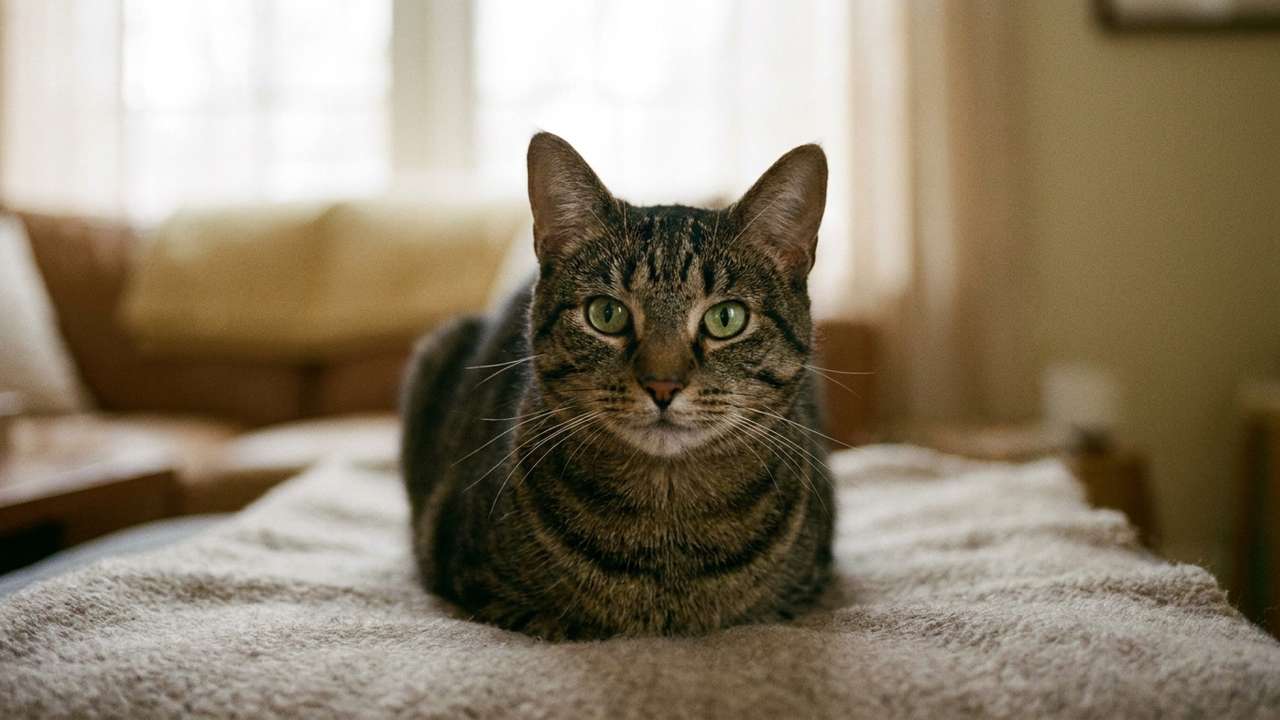
A cat is a small domesticated feline whose symbolism centers on independence, intuition, mystery, and quiet protection, which makes it one of the most layered animal symbols in human culture. Few creatures carry so many meanings at once: a cat can be a goddess’s companion, a sailor’s good luck charm, a witch’s familiar, or a household guardian, depending on who is telling the story.
That range is exactly why people keep asking what do cats symbolize. The honest answer is never a single word, and that is the point. This guide works through the core meanings, the way those meanings shift across cultures, the history that produced them, the spiritual traditions that shaped them, and how color and breed change the message. By the end, you will be able to read a cat symbol accurately, whether you meet one in art, in folklore, in a tattoo, or on your own doorstep.
The Core Meanings of Cat Symbolism
Cat symbolism is the collection of meanings that cultures attach to the domestic cat, and its most common meaning is independence combined with quiet protection.
Cats symbolize independence, intuition, mystery, protection, and feminine power, and the exact meaning depends on the culture, the color of the cat, and the situation in which it appears. Nearly every cat tradition on earth draws from the same small set of attributes, because those attributes come from the animal’s real behavior rather than from invention.
Independence and Self-Reliance
A cat symbolizes independence because it lives alongside people without fully surrendering to them. Unlike a dog, a cat keeps its own schedule, hunts alone, and decides when affection happens. Cultures that value self-determination read that behavior as strength, and cultures that value obedience read it as aloofness.
This is the most common meaning people are looking for. When someone says a person has a “cat-like” personality, they usually mean self-possessed, observant, and selective about company. In art and literature, the cat often stands for the part of a person that cannot be tamed.
Mystery, Intuition, and the Unseen
The cat symbolizes mystery because it moves silently, sees in near darkness, and disappears without a sound. Those physical traits became a metaphor for intuition: the ability to notice what others miss and to act on it before the evidence arrives.
Folklore across Europe, Asia, and the Americas treats the cat as an animal that senses spirits, storms, and death before people do. In Chinese folklore, black cats in particular are said to perceive unseen presences. In Scottish Gaelic tradition, the Cat Sidhe, a large black cat with a white patch on its chest, was said to collect souls before burial. The detail differs, but the underlying idea is constant: the cat knows something you do not.
Protection, Luck, and Prosperity
The cat symbolizes protection because it guarded the two things ancient households could not afford to lose: grain and children. A working cat kept rodents out of stored food and away from cradles, and that practical service became a symbol of unseen guardianship.
The luck association grew out of that protective role. Common readings of cat symbolism include:
- Guardianship: the cat watches over the home and its vulnerable members.
- Good fortune: a cat choosing your house is treated as a blessing in Russian, Polish, and German custom, where the cat is often sent through the door first.
- Prosperity: the Japanese maneki-neko, or beckoning cat, is placed in shops to draw money and customers.
- Safe travel: ships carried cats for pest control, and sailors read a cat’s behavior as an omen for the voyage.
- Fertility: in parts of India, the cat is linked to Shashti, a goddess associated with childbirth.
Feminine Energy and Fertility
The cat symbolizes feminine energy because of its grace, its softness paired with sharp capability, and its association with goddesses in Egypt, Greece, and Scandinavia. This is not a modern invention. Bastet in Egypt, Freya in Norse tradition, and Artemis and Hecate in Greek tradition all borrowed the cat’s imagery of watchful, self-directed female power.
Modern symbolism keeps that link alive but broadens it. A cat symbol now often represents autonomy and softness held together, rather than a single gendered role.
How Cat Symbolism Changes Across Cultures
Cat symbolism is not universal, and the same animal can mean opposite things in two neighboring countries.
The clearest example is the black cat, which is lucky in Japan and the United Kingdom and unlucky in parts of the United States and Eastern Europe. Anyone researching cat meanings should check the culture first, because a single global reading does not exist.
| Culture or Tradition | What the Cat Symbolizes |
|---|---|
| Ancient Egypt | Divinity, protection, fertility, and the goddess Bastet |
| Japan | Good fortune, business success, and protection of the home |
| China | Cleverness and suspicion, plus the ability to sense spirits |
| India | Childbirth, fertility, and caution against hypocrisy |
| Norse tradition | Love, fertility, and the goddess Freya |
| Medieval Europe | Witchcraft, temptation, and the devil |
| Islamic tradition | Cleanliness, gentleness, and household blessing |
| Scottish Gaelic folklore | The fairy Cat Sidhe and the journey of the soul |
| Russia and Slavic Europe | Good luck when a cat enters a new home first |
| United States | Independence and mystery, with black cats read as unlucky by many |
In ancient Egypt, the cat sat close to the divine. Bastet was depicted as a cat or as a woman with a cat’s head, and her cult center at Bubastis drew pilgrims from across the region. Ancient writers report that killing a cat was a serious crime, and that households shaved their eyebrows in mourning when a family cat died. Egypt is the source of the “cats were worshipped” idea that still shapes popular perception.
In Japan, the cat is a commercial and domestic blessing. The maneki-neko, usually shown as a calico with one raised paw, is often described as attracting money with the right paw and customers with the left. Japan also treats black cats as lucky, which surprises many Western readers.
In China, the cat carries more ambivalence. It is clever and useful, but it is also a trickster figure, and it never earned a place in the zodiac because of the famous folktale in which the rat cheated it out of the race. Chinese folklore also gives cats the ability to see spirits, and a cat jumping over a coffin is treated as a serious taboo in traditional funeral custom.
In India, the cat appears in two roles. It is linked to Shashti, a goddess connected with childbirth and the protection of children, and it also appears in the Panchatantra as a hypocrite pretending to be holy while hunting its prey. The tradition therefore holds both reverence and warning.
In Islamic tradition, cats are generally regarded as clean animals that may share a home and even a prayer space. A popular tradition holds that the Prophet Muhammad had a cat named Muezza and cut the sleeve of his garment rather than disturb the sleeping animal.
Medieval Europe is where the darkest meanings formed. Cats became associated with witches, night, and the devil, and that association drove centuries of suspicion that still echoes in Halloween imagery and in the black cat superstition.
The Historical Origins of Cat Symbolism
Cat symbolism followed a clear historical arc from sacred guardian to suspected demon to modern icon of independence.
Tracing that arc explains why the same animal can feel holy in one era and dangerous in the next. The symbolism changed whenever human circumstances changed.
- Domestication in the ancient world. Most histories place the domestication of the cat in ancient Egypt roughly 4,000 years ago, though some archaeological evidence points to an earlier partnership in the Near East. In every case, the cat earned its place by controlling rodents around stored grain.
- Classical Greece and Rome. Greek tradition linked the cat to Artemis and Hecate, goddesses of the hunt and the night. Roman legions and merchants then carried cats across Europe as pest control, spreading both the animal and its symbolism.
- Medieval Europe. In 1233, Pope Gregory IX issued the papal bull Vox in Rama, which is widely cited as linking cats, and especially black cats, to satanic ritual. Whether the document’s influence was as large as popular history claims, the association took hold, and cats became familiars in witch trials across Europe.
- The age of sail. Navies and merchant fleets carried cats for centuries to protect food stores. Sailors read their behavior as omens, and a ship’s cat became a symbol of safe passage.
- The modern era. Photography, advertising, and the internet turned the cat into a symbol of comfort, humor, and domestic independence. The older meanings did not vanish; they now sit alongside the new ones.
Cats in Spiritual and Religious Traditions
Cat symbolism in spiritual traditions rests on one core idea: the cat stands between the visible world and the unseen one.
That middle position explains why cats appear as guardians, messengers, and companions to deities across very different faiths. Three roles repeat most often.
- The guardian. In Egypt, the cat protected the household and stood beside Bastet. In Thai and Japanese temple traditions, temple cats are kept as living guardians of sacred space.
- The companion of the divine. Freya’s chariot was pulled by two cats in Norse myth, tying the animal to love, fertility, and the domestic sphere of a major goddess.
- The soul guide. In Scottish and Irish folklore, the Cat Sidhe moves between this world and the next, and in several European traditions a cat seen at night was read as a sign that a spirit was near.
Not every tradition is warm. In medieval Christian Europe, the cat became a symbol of temptation and hidden evil, largely because of its night habits and its unreadable face. That period produced the witch’s familiar and the black cat omen that still shape Western superstition.
The important nuance is that scripture and folklore are not the same thing. The domestic cat appears only indirectly in biblical texts, and most of the negative religious association comes from later European culture rather than from older sacred writing.
What Cat Colors and Breeds Symbolize
The color of a cat changes its symbolism more than any other single factor, and the same color can flip meaning between countries.
Breed matters too, though usually as a secondary signal. Color carries the superstition; breed carries the aesthetic and cultural story.
| Color or Breed | Common Symbolic Meaning |
|---|---|
| Black | Mystery and protection; lucky in Japan and the United Kingdom, unlucky in parts of the United States and Eastern Europe |
| White | Purity and innocence in the West; in some European folklore a white cat crossing your path is a bad omen |
| Orange or ginger | Warmth, vitality, and good fortune |
| Calico | Money and luck, especially in Japan and the United States, where the calico is nicknamed the money cat |
| Tortoiseshell | Resilience, independence, and quiet good fortune |
| Gray or blue | Calm, balance, and quiet wisdom |
| Tabby | Domesticity and groundedness; the forehead “M” carries several popular legends |
| Siamese | Royalty and elegance, tied to its status as a Thai heritage breed |
| Tuxedo | Formality and the balance of opposites |
The black cat deserves its own note because the split is so sharp. In Japan, a black cat is believed to attract good fortune and suitors. In the United Kingdom, a black cat arriving at your door is a blessing. In parts of Germany, the meaning depends on direction: a black cat crossing from right to left is unlucky, while the reverse is lucky. In Russia and parts of the United States, the same animal is read as a bad omen. The animal is identical in every case; only the local story changes.
The tabby’s “M” marking has several origin legends, including one linking it to the Virgin Mary and another linking it to the Prophet Muhammad’s cat. These are folk stories rather than documented history, and they are best understood as a sign of how eagerly cultures claimed the cat for their own traditions.
Cat Symbolism in Everyday Life and Pop Culture
Cat symbolism appears in modern life as a shorthand for independence, comfort, and quiet intelligence, and it shows up in places most people never stop to notice.
Designers, writers, and tattoo artists use the cat because it communicates quickly without needing explanation.
- Tattoos. A cat tattoo usually signals independence, intuition, or a personal bond with a specific animal. A black cat tattoo leans toward mystery and protection; a calico leans toward luck.
- Branding. Retail and technology brands use cat imagery to suggest agility, curiosity, and calm confidence.
- Literature. Edgar Allan Poe’s “The Black Cat” turned the animal into a symbol of guilt and conscience, while Lewis Carroll’s Cheshire Cat made it a symbol of a reality that will not sit still.
- Animation. Studio Ghibli’s Jiji in “Kiki’s Delivery Service” plays the cat as a practical guardian and a voice of caution.
- Home and decor. A cat figure by the door is a common good luck charm in East Asian households and businesses.
Consider a practical scenario. A small bakery opens on a quiet street and places a maneki-neko near the register with its right paw raised. The owner is not making a decorative choice alone; the owner is borrowing a centuries-old symbol that says “money enters here.” A neighbor who hangs a black cat sign instead is drawing on a different tradition entirely, one that says “this place is protected.” Both symbols work, but they tell different stories, and that is exactly how symbolism functions in daily life.
Common Misconceptions About Cat Symbolism
Most confusion about cat symbolism comes from treating one local tradition as if it were a global rule.
Correcting those assumptions makes the subject much easier to read.
- “Black cats are always unlucky.” This is a regional belief, not a universal one. Japan and the United Kingdom read black cats as lucky, and the modern “black cat bad luck” idea is largely a medieval European inheritance.
- “Ancient Egyptians worshipped cats as gods.” Egyptians revered cats and linked them to deities, especially Bastet, but they did not treat every household cat as a god. The popular version oversimplifies a real and serious religious practice.
- “A cat symbol means the same thing everywhere.” The cat is one of the most culturally variable symbols in the animal kingdom. Always ask which tradition the symbol comes from.
- “Cats are evil in the Bible.” The domestic cat barely appears in biblical text. The sinister reputation comes from medieval European folklore and witch trials, not from scripture.
- “Cats only symbolize femininity.” The feminine link is real and old, but the cat also stands for protection, prosperity, luck, and safe travel in traditions that have nothing to do with gender.
- “Nine lives means immortality.” The proverb points to agility and survival, not to literal immortality. It reflects the cat’s ability to escape danger, which is why the animal became a symbol of resilience.
Frequently Asked Questions About What Cats Symbolize
What do cats symbolize spiritually?
Spiritually, cats symbolize intuition, protection, and the boundary between the visible world and the unseen one. They appear as guardians in Egyptian and East Asian traditions, as companions of deities in Norse myth, and as soul guides in Celtic folklore. The common thread is watchfulness.
Is a black cat lucky or unlucky?
It depends entirely on where you are. Japan and the United Kingdom treat a black cat as a sign of good fortune, parts of Germany read the meaning from the direction it crosses, and Russia and parts of the United States treat it as unlucky. No single answer applies worldwide.
Why do cats symbolize independence?
Cats symbolize independence because they live with people while keeping their own schedule, hunting instincts, and boundaries. That behavior became a metaphor for self-reliance, which is why the cat appears so often in art and writing about freedom.
What does a cat symbolize in a dream?
Dream interpretation is a separate tradition with its own rules, but most dream lexicons read a calm cat as intuition or self-reliance and an aggressive cat as a boundary being crossed. Treat dream meanings as personal and cultural rather than fixed.
Do cats symbolize good luck in business?
Yes, in East Asian traditions. The maneki-neko, or beckoning cat, is placed in shops and restaurants to attract customers and money, and the calico version is especially associated with financial luck.
What does it mean when a cat crosses your path?
In much of Europe and North America, a cat crossing your path is treated as a small omen, and the meaning flips depending on the cat’s color and the direction of travel. In Japan and the United Kingdom, a black cat crossing your path is generally considered lucky.
Does a cat tattoo have a standard meaning?
No standard meaning exists, but most cat tattoos draw on independence, intuition, protection, or a personal bond with a cat. Color usually refines the message: black for mystery, calico for luck, white for purity.
Why Cat Symbolism Still Matters
Cat symbolism rewards attention because it is one of the clearest examples of how meaning is made. The animal never changed; the stories around it did. A creature that guarded grain in Egypt, sailed on merchant ships, was feared in medieval Europe, and now dominates screens has carried every human emotion we could attach to it.
The practical takeaway is simple. Read the culture first, then the color, then the context. Once you have those three, a cat symbol stops being vague and starts being specific.
- The most common meaning is independence combined with quiet protection.
- Culture changes the meaning more than anything else, especially for black cats.
- Color refines the message; breed mostly adds aesthetic and historical texture.
- Spiritual readings almost always center on intuition and guardianship.
Whether you are decoding a tattoo, choosing a shop charm, or simply curious about the cat asleep on your windowsill, the symbol has more depth than most people expect. Look closely, and the cat will keep telling you something new.