
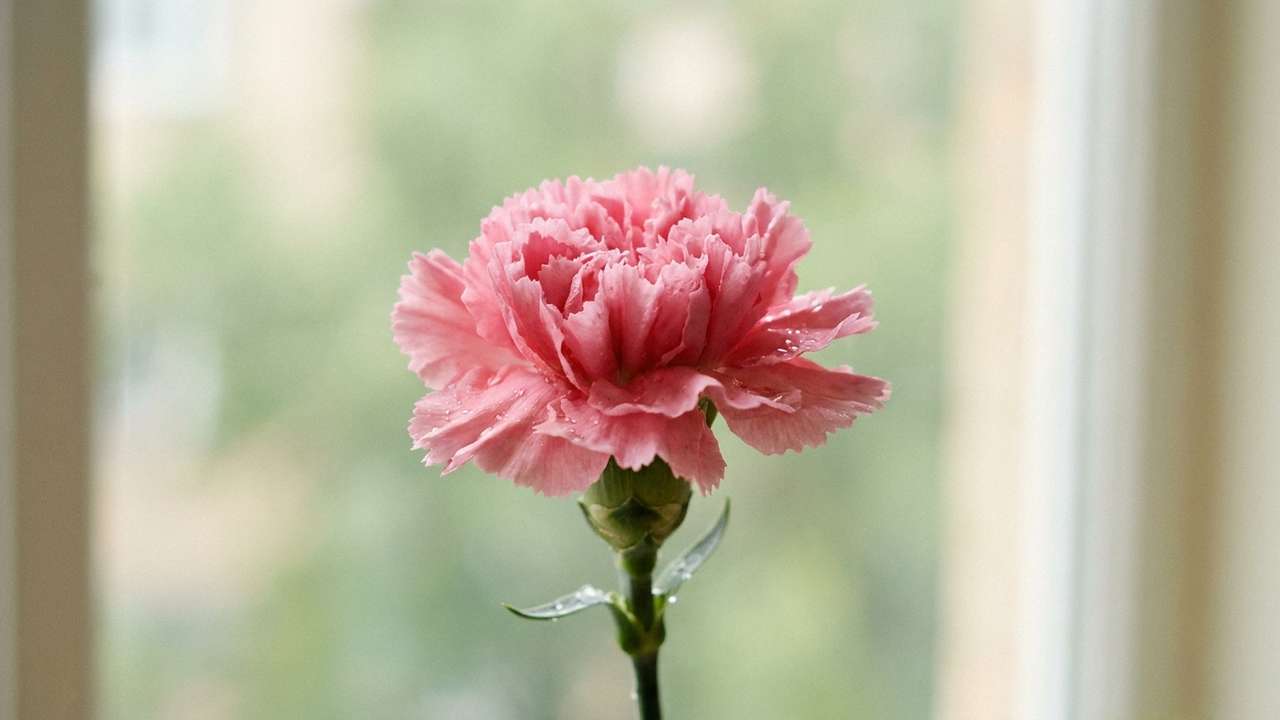
A carnation is a fringed, long-lasting flower of the genus Dianthus whose symbolism centers on love, fascination, distinction, and remembrance, and whose exact meaning shifts with color, culture, and occasion. That is why the same ruffled bloom can appear in a bride’s bouquet, on a mother’s lapel, in a funeral wreath, and inside the barrel of a rifle during a revolution. When people ask what do carnations symbolize, they are really asking about a flower with one of the longest and most layered meaning histories in the plant world.
This guide covers the full picture. You will learn the core meanings that apply to every carnation, how each color changes the message, where the symbolism came from, how different cultures read the flower, what it means in religious and spiritual settings, and how to choose the right carnation for a gift, a wedding, or a memorial. You will also get straight answers to the questions beginners ask most, plus the misconceptions that keep the carnation misunderstood.
What Carnations Symbolize at Their Core
The carnation symbolizes love, fascination, and distinction in the traditional language of flowers, and it carries those three ideas more consistently than almost any other bloom. The carnation’s core meaning is devoted love mixed with fascination and personal distinction, delivered in a flower that lasts longer than most. Florists call the carnation the flower of fascination because its meaning in Victorian flower dictionaries was literally “fascination,” the feeling of being drawn toward someone you cannot stop thinking about.
Distinction entered the meaning through the flower’s appearance. The carnation’s petals have a jagged, almost cut edge, and the word “carnation” itself is tied to “coronation,” which is why the flower historically suggested someone marked out for honor. Love entered the meaning through endurance. A cut carnation can hold its shape in a vase for one to two weeks, far longer than a rose, so the flower became a natural metaphor for a love that does not fade quickly.
The most common core meanings attached to carnations are:
- Love — romantic, familial, and maternal love, depending on color
- Fascination — attraction and deep interest in another person
- Distinction — admiration for someone who stands out
- Remembrance — honoring someone absent or lost
- Endurance — a bond that survives time and distance
- Maternal devotion — the bond between mother and child
One small linguistic note helps explain the flower’s pull. The word “carnation” also names a soft flesh-pink color, and painters in the Renaissance used it to describe skin tones. So the flower, the color, and the human body have been linked in language for centuries.
What Every Carnation Color Means
The color of a carnation is the single strongest signal of its meaning, and it overrides the flower’s general symbolism in almost every situation. Red says one thing, white says another, and yellow can say something the sender never intended. This is the part of carnation symbolism that matters most in real life, because a florist will ask you which color you want before asking anything else.
| Carnation Color | Primary Meaning | Best Occasion |
|---|---|---|
| Red | Deep love, admiration, respect, passion | Romantic gifts, anniversaries, political or labor commemorations |
| Dark red | Intense love and affection | Long-term partners, Valentine’s Day |
| Pink | Gratitude, a mother’s love, “I will never forget you” | Mother’s Day, thank-you gifts, sympathy |
| Light pink | Admiration, sympathy, gentle affection | New mothers, friends, get-well wishes |
| White | Pure love, innocence, good luck, remembrance | Weddings, funerals, memorials |
| Yellow | Victorian: disdain, rejection, disappointment. Modern: friendship, cheer, celebration | Get-well gifts, friendship bouquets, congratulations |
| Purple | Capriciousness and whimsy in Victorian floriography; elegance and success today | Formal events, achievement gifts |
| Striped or bicolor | Victorian: a refusal, or regret that love cannot be returned. Modern: uniqueness | Decorative arrangements, quirky bouquets |
| Green | Renewal, nature, luck | St. Patrick’s Day, spring arrangements |
| Orange and peach | Warmth, enthusiasm, appreciation | Birthdays, thank-you gifts |
Red and Pink Carnations: Love and Gratitude
Red carnations carry the strongest romantic charge of any carnation color, and they also function as a badge of respect. In Spain and parts of Latin America, a red carnation pinned to a jacket signals pride and courage. Pink carnations carry a softer message. They are the classic flower of maternal love and gratitude, and they are the color most often handed to mothers, teachers, and nurses.
White and Yellow Carnations: Remembered and Rejected
White carnations mean pure love and remembrance, which is why they appear at both weddings and funerals without contradiction. Yellow carnations are the color that trips people up. Victorian flower dictionaries assigned yellow carnations the meaning of disdain, rejection, and disappointment, so a yellow carnation sent in 1885 was an insult. In modern floristry, yellow carnations usually mean friendship, cheer, and congratulations instead, so the setting decides which reading applies.
Striped, Purple, and Green Carnations: Refusal, Whimsy, and Renewal
Striped carnations were the Victorians’ way of saying no, or of expressing regret that a feeling could not be returned. Purple carnations carried a reputation for capriciousness, though today they read as elegant and celebratory. Green carnations became famous in the late nineteenth century as a coded symbol worn by Oscar Wilde and his circle, and they retain a modern association with individuality and renewal.
Where Carnation Symbolism Comes From
Carnation symbolism grew from a mix of ancient Greek naming, medieval Christian legend, and nineteenth-century flower dictionaries, and each layer added a new meaning to the flower. No single source created the carnation’s symbolism. Instead, the meaning accumulated over roughly two thousand years, which is exactly why different sources give slightly different answers.
- Ancient Greece. The genus name Dianthus comes from the Greek words dios (of the gods, or of Zeus) and anthos (flower), so the carnation has been called the flower of the gods since antiquity. Greek writers described carnation-like plants and used them in ceremonial garlands.
- The Middle Ages and Christian legend. Tradition holds that carnations first bloomed from the tears the Virgin Mary shed as she watched Jesus carry the cross. Pink carnations became tied to a mother’s undying love because of this story.
- The Renaissance. Painters placed carnations in religious scenes as a symbol of love and future suffering. Leonardo da Vinci painted the Madonna with the Carnation, and Raphael’s Madonna of the Pinks shows the Christ child holding a pink carnation.
- The Victorian era. Flower dictionaries, called floriography guides, assigned coded meanings to every bloom. The carnation received fascination, distinction, and love, while yellow and striped varieties received negative readings.
- 1904. Ohio adopted the scarlet carnation as its state flower, a choice tied to President William McKinley, who famously wore a red carnation on his lapel.
- 1908. Anna Jarvis used white carnations at an early Mother’s Day service in Grafton, West Virginia, because the white carnation was her mother’s favorite flower. The white carnation became the original Mother’s Day emblem, worn in memory of a deceased mother and given in honor of a living one.
- 1974. On April 25, soldiers in Portugal placed red carnations in the barrels of their rifles during a nearly bloodless military coup. The event became known worldwide as the Carnation Revolution, and the red carnation became a global symbol of freedom and democracy.
That list explains something important. The carnation’s meaning is not fixed by nature. It is built by people, and different eras added different layers to the same flower.
Carnation Meanings Across Cultures
The carnation means different things in different countries, and in several places it carries national or political weight that has nothing to do with romance. A traveler who hands out carnations without knowing the local reading can send a message they never intended, so it helps to know the map.
| Country or Region | What the Carnation Means There | Typical Context |
|---|---|---|
| Spain | Passion, pride, national identity | Spain’s national flower; the red “clavel” appears in flamenco hair and on bullfighters’ jackets |
| Slovenia | National identity and heritage | Recognized as the national flower; worn during periods of national revival |
| Monaco | Royal celebration | Red and white carnations feature in princely ceremonies |
| Portugal | Freedom and democracy | Red carnations commemorate the Carnation Revolution of April 25, 1974 |
| South Korea | Parental love and filial respect | Parents’ Day on May 8: a red carnation if parents are living, white if they have passed away |
| China | Maternal love and gratitude | The most common Mother’s Day flower; also given to teachers |
| Japan | Mother’s Day devotion | Red carnations are the standard Mother’s Day gift |
| Netherlands | Royalty and quiet resistance | The white carnation was worn by Prince Bernhard and later used as a symbol during the Second World War |
| France | Working-class pride; historically, political allegiance | The “oeillet” was worn by supporters of General Boulanger in the 1880s |
| Central Europe | Labor and socialist movements | Red carnations appeared at workers’ rallies and May Day events |
| United States | Motherhood and civic pride | Mother’s Day flower; scarlet carnation is Ohio’s state flower |
The negative readings belong on the map too. In Victorian Britain and France, a yellow carnation meant disdain or rejection, and sending one to a suitor was a polite way to end a courtship. In parts of Central Europe, the red carnation’s association with political rallies made it unfashionable for everyday gifting during the late twentieth century. The flower itself never changed. The company it kept did.
The Spiritual and Religious Meaning of the Carnation
The carnation holds a strong spiritual meaning in Christian tradition, where it represents a mother’s love and Christ’s sacrifice, but that meaning comes from legend and art rather than from scripture. Carnations are not named in the Bible. Their religious symbolism was built by medieval storytellers and Renaissance painters who used the flower to carry a message the viewer would recognize immediately.
In the most widely told legend, carnations first appeared where the Virgin Mary’s tears fell as Jesus carried his cross, which is why the pink carnation became the flower of a mother’s undying love. Red carnations point in a different direction. They came to represent the blood of Christ and the Passion, so a red carnation in a religious painting told the viewer that suffering and love were connected.
Renaissance art made this symbolism explicit. Leonardo da Vinci’s Madonna with the Carnation places the flower in the mother’s hand, while Raphael’s Madonna of the Pinks, held in the National Gallery in London, shows the infant Christ holding a pink carnation that foretells his future suffering. A viewer in 1500 needed no caption. The flower did the explaining.
In modern practice, white carnations are one of the most common flowers placed in funeral arrangements and at memorial altars in Catholic and Protestant communities, where they stand for innocence, prayer, and remembrance. Pink carnations appear in church displays honoring mothers on Mother’s Day, and parishes often order them in bulk for that service.
Outside Christianity, the carnation does not carry a formal role in any major religious text. Its spiritual weight is cultural and emotional rather than doctrinal, which is precisely why it travels so easily between a wedding, a memorial, and a hospital room.
What It Means When You Give Someone Carnations
What a carnation means in the moment of giving depends on the occasion, and the occasion usually determines the color, the number, and even the wrapping. The same flower can congratulate a graduate, comfort a mourner, or thank a mother, and the recipient reads the message from the context before reading it from the bloom.
Mother’s Day and Family Occasions
Red and pink carnations are the standard Mother’s Day gift in the United States, Japan, China, and South Korea. The older tradition, started by Anna Jarvis, used a white carnation to honor a mother who had died and a red or pink carnation to honor a living mother. In South Korea, families follow a similar rule on Parents’ Day: wear red if your parents are alive, white if they have passed away. Never give white carnations to a living parent in Korean and Chinese cultural settings, because white reads as a memorial color there.
Weddings and Celebrations
Pink, white, and peach carnations dominate wedding work because they are affordable, hold up through a long day, and photograph well. Grooms and groomsmen wear pink or red carnation boutonnieres, and carnations are often listed as the traditional flower for a first wedding anniversary. If you are planning a large event on a tight budget, carnations give you volume that roses cannot match at the same cost.
Funerals and Remembrance
White carnations are the safest choice for sympathy arrangements, where they signal purity, remembrance, and respect. Many florists build sympathy sprays around white carnations as a base because the flower lasts through a multi-day viewing. Red carnations at a funeral can also be appropriate when the deceased had a strong personal connection to the flower or to a cause it represents.
Personal Meanings: Birth Flower and Tattoos
The carnation is one of the two birth flowers for January, alongside the snowdrop, which makes it a meaningful birthday gift for anyone born in that month. In tattoo art, a carnation usually represents love, remembrance, or a January birthday, and the color choices carry the same meanings they do in a bouquet. A red carnation tattoo reads as passionate love, a pink one as maternal devotion, and a white one as memory or loss.
Here is a practical example. Suppose a colleague’s mother has just died and you want to send flowers. You choose a sympathy arrangement of white carnations with soft greenery, avoid yellow and striped varieties entirely, and include a short card. The color does the emotional work before your words arrive.
Misconceptions About Carnations and Related Flower Symbols
Carnations carry more myths than almost any other commercial flower, and most of those myths come from the flower’s low price rather than from its history. Carnations are one of the oldest cultivated flowers in the world, and they were once among the most prestigious blooms a person could wear. Their affordability today is a product of modern greenhouse farming, not a sign of low status.
Common misconceptions include the following:
- Myth: Carnations are cheap filler with no meaning. Reality: they carry fascination, distinction, and love in floriography and have been cultivated for over two thousand years.
- Myth: Yellow carnations always mean rejection. Reality: the rejection meaning comes from Victorian floriography; modern florists usually send yellow carnations to mean friendship, cheer, or get well soon.
- Myth: Carnations and “pinks” are the same flower. Reality: pinks are close relatives in the same genus but a different species, and the name “pink” comes from the petals’ jagged, pinked edge, not from the color.
- Myth: Carnation symbolism never changes. Reality: the meaning has shifted with every era, from Greek ceremony to Christian legend to Victorian codes to the Portuguese revolution.
- Myth: Carnations are harmless around pets. Reality: the ASPCA lists carnations as mildly toxic to cats, dogs, and horses, so keep arrangements out of reach.
It also helps to see how the carnation compares with the other flowers it is most often confused with or paired with.
| Flower | Core Symbolic Meaning | Best Occasion |
|---|---|---|
| Carnation | Love, fascination, distinction, remembrance | Mother’s Day, weddings, funerals, everyday gifts |
| Rose | Romantic love, desire, secrecy | Valentine’s Day, anniversaries, apologies |
| Chrysanthemum | Longevity, joy, and in some cultures mourning | Autumn displays, memorials in parts of Europe and Asia |
| Lily | Purity, renewal, sympathy | Funerals, Easter, formal celebrations |
The rose gets the romance, the lily gets the mourning, and the carnation quietly handles everything in between while outlasting both in the vase.
Frequently Asked Questions About Carnation Symbolism
What do carnations symbolize in love?
Red carnations symbolize deep romantic love, admiration, and respect, while pink carnations symbolize a gentler, often maternal love and gratitude. In the Victorian language of flowers, the carnation as a whole meant fascination, which is closer to infatuation and deep interest than to simple affection.
What does a white carnation mean at a funeral?
A white carnation at a funeral means purity, remembrance, and innocent love. It is one of the most traditional sympathy flowers because the color carries no romantic charge and the bloom lasts through a long memorial service.
Are carnations good luck or bad luck?
Carnations are generally considered a lucky flower, and white carnations in particular are associated with good luck and good fortune. The only negative reading in Western tradition belongs to yellow and striped carnations, which meant rejection and refusal in Victorian floriography.
What is the January birth flower?
The January birth flower is the carnation, paired with the snowdrop. Anyone born in January can claim the carnation, which makes it a natural birthday gift with built-in meaning.
Do carnations have any negative symbolism?
Yes, but only in specific traditions. Yellow carnations meant disdain and disappointment in Victorian flower dictionaries, striped carnations meant a refusal, and purple carnations meant capriciousness. In modern floristry, most of these readings have softened or disappeared.
Are carnations appropriate for a wedding?
Carnations are entirely appropriate for weddings and are widely used in bouquets, boutonnieres, and centerpieces. Pink and white carnations are the most common choices, and their durability makes them a practical pick for outdoor ceremonies in warm weather.
Why Carnation Symbolism Still Matters Today
The carnation symbolizes love, fascination, distinction, and remembrance, and those four meanings have survived Greek ceremony, Christian legend, Victorian flower codes, and a revolution in Portugal. The color you choose decides which meaning you send: red for passionate love, pink for gratitude and maternal devotion, white for purity and memory, yellow for friendship in most modern settings, and striped or purple for something more personal. Culture decides the rest, which is why a white carnation celebrates a bride in one country and mourns a parent in another.
Understanding carnation symbolism turns an inexpensive flower into a precise message. You no longer have to guess whether a bouquet says thank you, I love you, or I remember you, because the flower has been saying all three for centuries. The next time you stand in front of a florist’s bucket of ruffled blooms, you will know exactly which one to pick, and exactly what it will say when it arrives.