
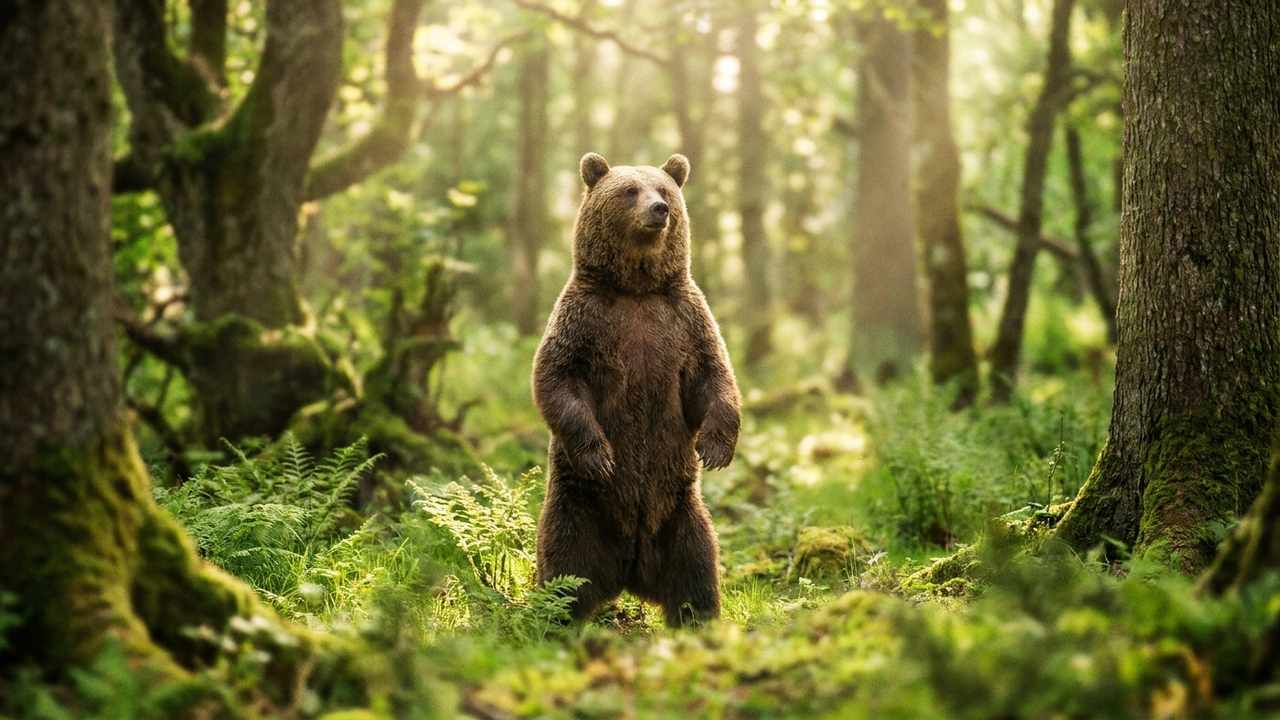
A bear symbolizes strength, power, protection, and courage, and it stands as one of the oldest and most widely recognized animal symbols in human history. When people ask what does a bear symbolize, they usually want the meaning behind a tattoo, a dream, a family crest, a company logo, a national emblem, or a personal spirit animal. The short answer is strength and guardianship, but the full answer changes depending on culture, species, and situation.
This guide walks through every major layer of bear symbolism. You will learn the core meaning that most readers are looking for, how different cultures from Finland to Korea to North America read the same animal, the spiritual role of the bear as a guide and healer, how the meaning shifts from a grizzly to a polar bear to a teddy bear, and where the whole tradition began. By the end, you will be able to read any bear symbol you meet and understand exactly what it is saying.
What a Bear Symbolizes at Its Core
The bear symbolizes raw strength, protective power, courage, and quiet wisdom. The bear is the classic symbol of strength and protection because it is a powerful, solitary animal that defends its territory and its cubs without hesitation. That combination of muscle and guardianship sits at the center of nearly every bear meaning in the world, no matter which continent you visit.
Strength comes first because of simple biology. In Europe, Asia, and North America, the bear is the largest land carnivore most people will ever encounter, and it can stand on two legs, run quickly, and dig through hard ground. Ancient humans watched this and drew a clear conclusion: the bear represented dominance, physical power, and the ability to overcome any obstacle.
Protection and motherhood come second, and they matter just as much. A mother bear with cubs is famously dangerous, which is why the she-bear became a universal emblem of fierce parental love and guardianship. This is one of the very few animal symbols where tenderness and violence live inside the same image without contradiction.
Wisdom and introspection come third. Bears hibernate through the winter, disappearing into the earth and emerging in spring. Early cultures read this as a cycle of death and rebirth, retreat and renewal, and the bear became a symbol of inner reflection, healing, and knowledge that comes from solitude rather than noise.
The core attributes of bear symbolism break down like this:
- Strength: physical power, dominance, and the ability to endure hardship.
- Protection: guardianship of family, territory, and community, especially by a mother bear.
- Courage: the willingness to stand and fight rather than retreat.
- Healing and renewal: the hibernation cycle of rest, recovery, and rebirth.
- Wisdom and introspection: solitude as a source of insight.
- Independence: the bear is largely solitary and answers to no pack.
Bear Symbolism Across Cultures and Traditions
Bear symbolism differs by culture, and that is the single most important thing to understand before you attach a meaning to any bear image. Some traditions treat the bear as a sacred ancestor and healer, while others treat it as a dangerous brute. The same animal carries respect in one region and fear in another, so context decides the message.
The table below shows how some of the best-documented traditions read the bear.
| Culture or Tradition | Typical Bear Meaning |
|---|---|
| Ancient Greece | The bear was sacred to Artemis, goddess of the hunt and wild animals, and young girls performed bear rituals at Brauron as a rite of passage into adulthood. |
| Norse and Germanic peoples | The bear stood for battle strength and courage, and warriors known as berserkers took the bear as a fighting model. |
| Slavic and Finno-Ugric peoples | The bear was the master of the forest, a sacred ancestor figure treated with respectful avoidance and never named directly. |
| Celtic traditions | The bear represented warrior strength and sovereignty, and many scholars connect the name Arthur to an old Celtic word for bear. |
| Native American nations | Meanings vary by nation, but the bear commonly stands for healing, medicine, courage, family protection, and clan identity, and many peoples treat the bear as a healer spirit. |
| Ainu of northern Japan | The bear was a divine visitor from the mountain world, honored in the Iomante ceremony and returned to the spirit realm with gifts. |
| Korea | In the founding legend of Dangun, a bear-woman named Ungnyeo becomes the mother of the Korean people, so the bear represents endurance and national origin. |
| China and East Asia | The bear represents strength and bravery, and the giant panda later became a national symbol of peace and friendship. |
| Medieval Europe | Bestiaries often painted the bear negatively, as a gluttonous, greedy, and uncontrolled beast, which is the clearest example of a plainly unfavorable bear meaning. |
| Modern Russia | The bear became a national symbol of size and power, though outsiders often use it as a caricature rather than a compliment. |
Notice the pattern. Where people lived close to bears, the animal earned reverence. Where the bear became a folk story about excess and appetite, the meaning flipped. If a bear symbol appears in your family history or a piece of art, the culture of origin usually tells you which version you are looking at.
The Spiritual Meaning of the Bear and the Bear Spirit Animal
The bear carries a strong spiritual meaning as a guide of introspection, healing, and grounded strength. In many traditions the bear is a spirit animal or power animal, which means it represents qualities a person can consciously develop rather than a simple fortune sign. When the bear appears as your guide, the message usually points inward rather than outward.
Shamanic traditions across Siberia, northern Europe, and parts of North America treated the bear as a mediator between the human world and the spirit world. Because the bear stands upright like a person and sleeps through the winter like the dead, it seemed to live between categories, and that in-between position made it a natural messenger. The Ainu Iomante ceremony and bear clan traditions among several Native American nations both reflect this idea that the bear travels between worlds and returns with knowledge.
Six spiritual themes show up again and again in bear symbolism:
- Introspection. The bear teaches retreat, rest, and honest self-examination before action.
- Healing. Many traditions link the bear to medicine, herbal knowledge, and recovery from illness or grief.
- Grounding. The bear is heavy, calm, and connected to the earth, so it represents stability under pressure.
- Protective love. The mother bear stands for fierce care of children, family, and community.
- Leadership through presence. The bear does not need to roar constantly, and its power is quiet until it is tested.
- Renewal. Spring emergence from the den symbolizes a new season of life after a hard one.
You may also encounter the bear in religious texts, where it often appears as a symbol of danger or a threat to be overcome. That is a specific scriptural study with its own rules, and it is different from the general cultural symbolism described here, so treat those references separately rather than blending them into the broader meaning.
Bear Symbolism by Species and Form
The meaning of a bear changes with the species, because each type of bear looks and lives differently. A polar bear and a teddy bear share a name and almost nothing else, so the image you are looking at matters as much as the word. This is where most people go wrong when they try to interpret a bear tattoo, logo, or piece of art.
| Bear Species or Form | Symbolic Meaning |
|---|---|
| Brown bear and grizzly | Raw power, wilderness, dominance, courage, and untamed nature. |
| Polar bear | Purity, endurance, survival in harsh conditions, Arctic strength, and vulnerability to a changing climate. |
| Black bear | Quiet strength, adaptability, and in many Native American traditions a link to healing and plant medicine. |
| Giant panda | Peace, gentleness, diplomacy, and conservation, a meaning reinforced by the World Wide Fund for Nature adopting the panda as its logo after the organization was founded in 1961. |
| Teddy bear | Innocence, comfort, childhood, safety, and unconditional love, a meaning that comes from the toy named after President Theodore Roosevelt in the early 1900s. |
| Bear paw print | Direction, trail, presence, and protection, often used to mark a path or a territory. |
| Mother bear with cubs | Motherhood, guardianship, family loyalty, and protective love. |
| Bear claw or bear tooth | Status, honor, and hunting achievement in several Plains nations, where such items were worn as marks of respect. |
A practical example makes this clear. Imagine two people getting matching bear tattoos. One chooses a polar bear on a glacier to represent endurance through a difficult decade. The other chooses a mother grizzly with two cubs to represent protecting a young family. Same animal family, completely different meanings, and neither person is wrong.
What a Bear Symbolizes in Everyday Contexts
In everyday life, the bear most often signals strength, loyalty, and protection rather than anything mystical. Tattoos, logos, flags, and team names lean on that practical reading because it communicates instantly and works across languages. If you are choosing a bear for a design or a brand, the practical meaning is the one your audience will actually receive.
Consider a realistic scenario. A small family business owner wants a logo for a security and home-repair company. She picks a walking brown bear in profile because customers read it as dependable, watchful, and strong, and the mark works equally well on a truck door and a phone screen. That is bear symbolism doing practical work, no ritual attached.
The most common everyday settings for bear symbols include:
- Tattoos: strength, family protection, courage after loss, or a personal spirit animal.
- Logos and brands: reliability, power, and quiet confidence, especially in security, finance, and outdoor industries.
- National and regional emblems: Russia uses the bear as a national symbol, the California state flag carries a grizzly, and the city of Berlin uses a bear on its coat of arms.
- Family crests and heraldry: courage and guardianship, often inherited rather than chosen.
- Sports teams and mascots: toughness, competitiveness, and physical dominance.
- Children’s items: comfort and safety through the teddy bear image.
- Jewelry and charms: a personal reminder of resilience or a tribute to a loved one.
Where Bear Symbolism Comes From: History and Language
Bear symbolism is ancient, and its history explains why the animal carries so much weight today. The bear was one of the first animals humans depicted, and it was also one of the first animals humans were afraid to name out loud. Those two facts together produced a symbol that lasted tens of thousands of years.
An ordered look at the history shows how the meaning developed:
- Prehistoric cave art. Bear images and bear remains appear in European caves dating back more than 30,000 years, including the Chauvet Cave in France, where bear skulls were deliberately arranged and a bear skeleton was left in place.
- The unnamed animal. Speakers of Proto-Indo-European used a word for bear that survives in Greek and Latin roots, but many later cultures replaced it with respectful nicknames for fear of summoning the animal by name.
- Nickname becomes the name. Germanic speakers called the bear the brown one, which became bear in English, while Slavic speakers called it the honey-eater, which became medved in Russian and related languages.
- Warrior cults. Norse warriors known as berserkers modeled themselves on the bear, and Celtic and Germanic tribes used the bear as a battle emblem.
- Medieval reinterpretation. European bestiaries recast the bear as greedy and uncontrolled, which is where the negative strand of bear symbolism entered Western culture.
- The friendly bear. In the early 1900s the teddy bear turned the animal into a symbol of comfort in the English-speaking world.
- The conservation bear. In the twentieth century the panda and the polar bear became global symbols of wildlife protection and climate concern.
That history explains a small but real puzzle. The English word bear literally means the brown one, which tells you that even the name we use is a symbol rather than a description.
Bear vs. Wolf, Lion, and Eagle: How the Symbol Compares
The bear compares to other great animal symbols by emphasizing solitary strength rather than group loyalty or speed. A wolf means the pack, a lion means royalty, and an eagle means vision and freedom, while a bear means personal power you carry alone. Choosing between them is really choosing which kind of strength you want to express.
| Symbol | Core Meaning | Typical Use | Key Difference from the Bear |
|---|---|---|---|
| Bear | Strength, protection, courage, introspection | Tattoos, security brands, national emblems, family crests | Solitary and grounded, power without a group |
| Wolf | Loyalty, family, teamwork, instinct | Family crests, sports teams, group identity | Emphasizes the pack instead of the individual |
| Lion | Royalty, authority, dominance, nobility | Heraldry, government emblems, luxury brands | Emphasizes rank and command rather than protection |
| Eagle | Vision, freedom, perspective, spirit | National seals, military insignia, spiritual symbols | Emphasizes height, sight, and freedom rather than earthbound power |
| Tiger | Ferocity, passion, raw energy, beauty | Martial arts, luxury, personal strength | Emphasizes speed and aggression rather than calm endurance |
If you are choosing between these symbols, ask a simple question: do you want to show that you belong to a group, that you hold authority, that you see far ahead, or that you are simply strong and dependable on your own? The bear answers the last one.
Common Questions About Bear Symbolism
What does a bear symbolize in a tattoo?
A bear tattoo usually symbolizes strength, courage, and protection, and it often carries a personal story. Common variations include a mother bear with cubs for family guardianship, a polar bear for endurance, a bear paw print for direction and presence, and a geometric bear for modern minimalism. The tattoo means what the wearer intends, but the general reading is almost always strength and loyalty.
What does a bear symbolize in dreams?
In general dream folklore, a bear usually points to personal power, a protective instinct, or a large challenge you are facing. A calm bear often suggests confidence and self-assurance, while a chasing or aggressive bear tends to suggest pressure or a threat you feel you cannot control. Dream interpretation is a separate tradition from cultural symbolism, so treat these as commonly repeated readings rather than fixed rules.
What does a white bear or polar bear symbolize?
A white bear symbolizes purity, endurance, and survival in extreme conditions. In Arctic and northern cultures it also carries spiritual weight as a master of the ice. In modern usage, the polar bear has become one of the most recognizable symbols of climate change and wildlife conservation.
Is the bear a symbol of good luck?
The bear is generally a positive symbol, but it is associated more with strength and protection than with luck in the lottery sense. In several traditions it is a favorable omen of healing, family safety, and personal power. In medieval European bestiaries, however, the bear carried a negative meaning of greed and uncontrolled anger, so the answer depends on the tradition you follow.
Why is the teddy bear a symbol of comfort?
The teddy bear symbolizes comfort and innocence because it was created as a child’s toy in the early 1900s and named after President Theodore Roosevelt. Over the following century it became a universal image of safety, affection, and childhood, which is why the same animal that means ferocity in the wild means gentleness as a stuffed toy.
What does a bear symbolize in Native American culture?
Meanings vary by nation, so no single answer covers all of them. Broadly, the bear often represents healing, medicine, courage, family protection, and clan identity, and many nations honor the bear as a healer spirit with knowledge of plants and remedies. Because traditions differ, the respectful approach is to identify the specific nation and its teaching rather than generalizing.
Conclusion: The Enduring Meaning of the Bear
The bear symbolizes strength, protection, courage, healing, and quiet wisdom, and those meanings have survived for tens of thousands of years for a simple reason: they describe qualities people genuinely want in themselves and in the people who protect them. Culture changes the framing, from sacred ancestor in Siberia to national emblem in Russia to a soft toy on a child’s bed, but the core message stays remarkably stable.
Understanding bear symbolism helps you read tattoos, logos, dreams, family histories, and works of art with real accuracy instead of guesswork. Start with the most common meaning of strength and guardianship, then ask where your bear comes from and in what form it appears. The bear has carried human fear and admiration on its back for millennia, and it will keep doing so as long as people value power that protects rather than power that simply takes.