
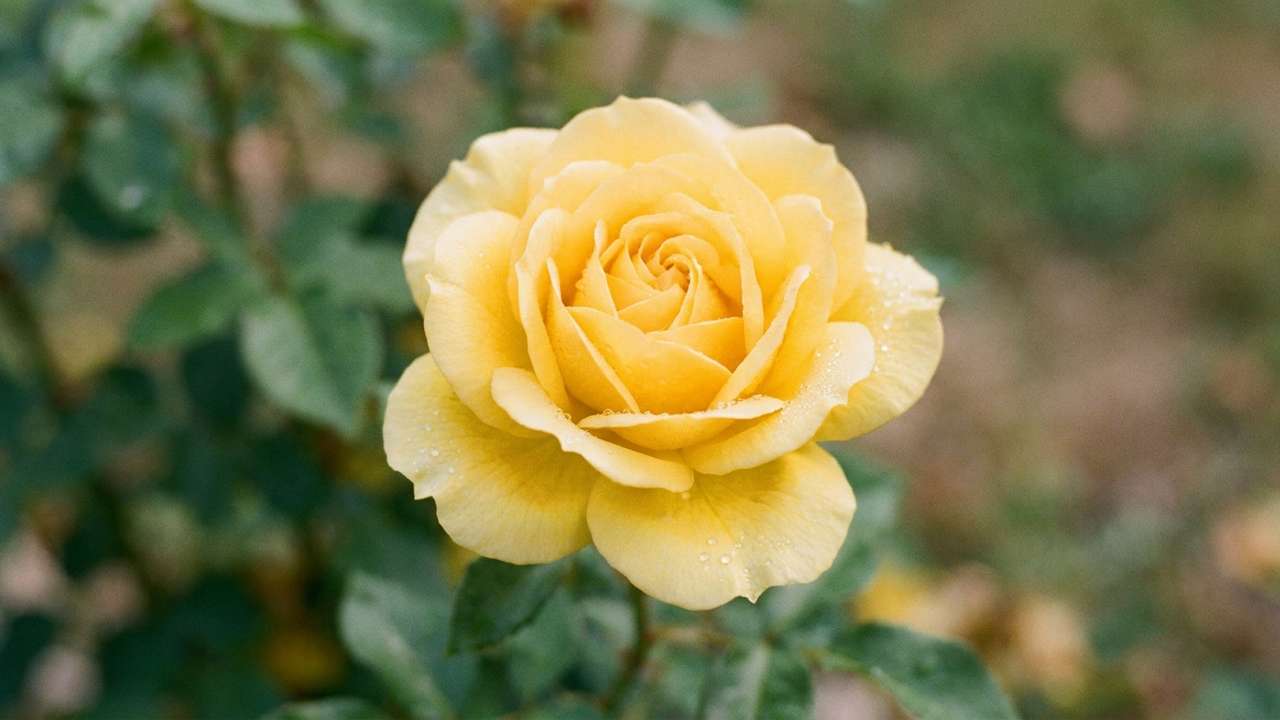
Yellow roses symbolize friendship, joy, and warm appreciation, which makes them the flower people give to celebrate a bond rather than to declare romantic passion. That single idea, a yellow bloom as the color of sunshine and easy affection, is the foundation for almost everything else the flower means. When people ask what do yellow roses symbolize, they usually want to know whether a bouquet is romantic, whether it can be given to a friend, and whether any culture reads the yellow color as bad luck. The answer depends on context, history, and geography, and all three matter more than most people expect.
This guide walks through the core meaning first, then traces where that meaning came from, how different cultures read the same flower in completely opposite ways, what a yellow rose says in specific situations like an apology or a farewell, and how shades and varieties shift the message. It also clears up the myths that make people hesitate before buying a bunch, so you can hand over a yellow rose with confidence instead of a nervous explanation.
The Core Meaning of Yellow Roses
Yellow roses primarily symbolize friendship, happiness, and positive energy. The color yellow carries the same visual weight as sunlight, so the flower reads as warmth and optimism before a single word is spoken. This is why a yellow rose is the standard choice for a colleague’s promotion, a neighbor’s new home, or a friend who simply deserves a good day.
Yellow roses symbolize platonic love, joy, and gratitude, and they carry none of the heavy romantic expectation that red roses do. That distinction is the whole point of the flower. A red rose asks a question. A yellow rose gives an answer: I am glad you exist.
Friendship Before Romance
Friendship is the meaning most people are looking for, and it is the one florists confirm every day. Yellow roses say “we are good” without asking for anything back. They work between people who have known each other for twenty years and between people who met last month, and that flexibility is rare in flower language.
Joy, Optimism, and Sunshine
The second layer is pure mood. Yellow is the color of daylight, and a yellow bouquet lifts a room the way an open curtain does. People send yellow roses to someone recovering from illness, finishing a hard semester, or coming out of a difficult season, because the flower signals brightness without pretending the difficulty never happened.
Welcome, Gratitude, and New Beginnings
Yellow roses also mark fresh starts and thank-yous. They appear at housewarmings, first days at a new job, and the doorstep of someone who helped you move a sofa on a Saturday. The core meanings of the flower break down neatly:
- Friendship and platonic affection
- Joy, cheerfulness, and optimism
- Gratitude and appreciation
- Welcome and new beginnings
- Familiarity and comfort between people who know each other well
- Congratulations on a personal or professional win
Where the Yellow Rose Meaning Comes From
The modern friendship meaning is a reversal of an older, harsher reading. In the Victorian era, when flower dictionaries and floriography guides turned bouquets into coded messages, several of those guides assigned yellow roses meanings like jealousy, fading love, or infidelity. A yellow rose sent by a suitor in the 1800s could be read as an accusation rather than a compliment.
That reading lost its grip in the twentieth century. As flower giving became less coded and more casual, the visual logic of the color won out: yellow looks like sunshine, sunshine feels good, so a yellow rose became a good thing. By the later twentieth century, the friendship meaning had become dominant across most of the English-speaking world, and it remains dominant today.
| Period | Dominant meaning of yellow roses | Who used the flower that way |
|---|---|---|
| Victorian era, nineteenth century | Jealousy, fading affection, or a warning | Readers of published flower dictionaries and floriography guides |
| Early to mid twentieth century | Mixed, with warmth and welcome growing stronger | Florists, greeting card makers, casual gift givers |
| Late twentieth century to today | Friendship, joy, gratitude, congratulations | Widely shared across most of the world |
The lesson from that timeline is simple. Meanings attached to flowers are conventions, not laws, and conventions change when enough people use them differently. A yellow rose today is far more likely to be read as friendly than as jealous, but the older meaning still survives in pockets, which is exactly why culture matters so much.
What Yellow Roses Mean in Different Cultures
Yellow roses do not carry one universal meaning. Several cultures read the flower as warm and celebratory, while others treat yellow flowers as a signal of parting, mourning, or bad luck. Knowing which context you are in prevents a well-meant bouquet from landing badly.
Western Europe and the English-Speaking World
In the United Kingdom, the United States, Canada, Australia, and most of Western Europe, yellow roses read as friendship and cheer. They are a safe gift for coworkers, neighbors, teachers, and friends, and they are commonly given for get-well occasions and congratulations. The older jealous meaning is now mostly a piece of trivia rather than a live concern.
Mexico and Parts of Latin America
Yellow flowers carry mourning associations in Mexico, where yellow and orange marigolds are central to Day of the Dead observances. Because of that broader cultural link between yellow blooms and remembrance, some Mexican recipients may read a bouquet of yellow roses as somber rather than celebratory. In these settings, red, white, or pink roses are usually safer for a happy occasion, and yellow roses are better suited to honoring memory.
Russia, Ukraine, and Parts of Eastern Europe
Many people in Russia and neighboring countries associate yellow flowers with separation, farewell, or betrayal, and some will quietly wince at a yellow bouquet offered to a partner. The convention is not absolute and younger urban gift givers are more relaxed about it, but the belief is still widely recognized. A second rule matters just as much in this region: even numbers of flowers are traditionally reserved for funerals and memorials, while odd numbers are given for celebrations.
The Middle East and Parts of Asia
In some Middle Eastern traditions, yellow can read as a sign of deceit or disloyalty, while in others it simply signals brightness. The variation is regional and generational, so a local florist is a better guide than a general rule. In parts of South Asia, yellow is auspicious and celebratory, tied to harvest and festivity, which pulls the flower back toward joy.
East Asia
In Chinese culture, yellow has historically been an imperial and auspicious color associated with good fortune, though yellow and white flowers together can carry funeral associations and are chosen with care. Japanese flower language readings sometimes assign yellow roses meanings closer to jealousy or longing rather than simple friendship, which shows how one color can hold opposite meanings in neighboring countries.
- United States and United Kingdom: friendship, joy, congratulations
- Mexico: remembrance and mourning associations for yellow blooms
- Russia and Eastern Europe: often read as farewell or separation; even stem counts for funerals
- Parts of the Middle East: sometimes read as deceit or disloyalty
- China: auspicious imperial color, though yellow and white together can signal mourning
- Japan: some readings lean toward jealousy or longing
What Yellow Roses Mean in Specific Situations
Yellow roses carry different shades of meaning depending on the occasion, and the same bouquet can read as celebration, apology, or goodbye. Context does most of the talking, so match the flower to the moment before you order.
- New friendship. A single yellow rose or a small bunch is the classic way to say you value a new connection without implying more.
- Apology. Yellow roses work as a gentle peace offering because they signal warmth and a desire to move forward rather than dramatic remorse. Pair them with a short, plain note.
- Congratulations. Promotions, graduations, book launches, and exam results all suit yellow roses, which celebrate without romantic overtones.
- Get well soon. The brightness of the flower suits recovery, and a mixed bouquet with yellow roses and white filler reads as calm and hopeful.
- New home or new baby. Yellow roses say welcome, which is why they show up on doorsteps with a card and a plate of food.
- Thank you. Teachers, nurses, colleagues, and neighbors receive yellow roses as straightforward gratitude.
- Farewell or moving away. In this case the older separation meaning works in your favor. Yellow roses suit a goodbye that is warm rather than tragic.
- Sympathy and remembrance. This is the one occasion where culture matters most. In Mexico and some other traditions yellow is appropriate for remembrance, while in Russia and much of Europe white flowers are the safer choice.
Consider a practical scenario. A manager wants to thank a team member who covered a difficult project. Red roses would be awkward and possibly misread. A dozen yellow roses with a handwritten card saying thank you lands exactly right, signals warmth without ambiguity, and stays appropriate for an office setting.
Shades, Varieties, and How the Meaning Changes
Not every yellow rose says the same thing. Pale lemon, saturated gold, and bicolored blooms each push the message in a slightly different direction, and the number of stems adds another layer on top.
| Shade or variety | Typical reading | Best occasion |
|---|---|---|
| Pale lemon or butter yellow | Gentle friendship, new beginnings, quiet warmth | New job, new neighbor, early friendship |
| Bright sunshine yellow | Pure joy and celebration | Birthdays, congratulations, get well |
| Deep golden yellow | Long-standing loyalty and mature affection | Anniversaries of friendship, long colleagues |
| Yellow with red edges | Friendship turning into something more | Ambiguous courtship, a hopeful hint |
| Yellow blended with orange or peach | Enthusiasm, passion with warmth | Encouragement, creative projects |
| Yellow with white | Friendship plus sincerity, or remembrance in some cultures | Sympathy in some regions, thank you in others |
Stem Counts and Their Conventions
Florist convention attaches loose meanings to the number of stems, and while these are customs rather than rules, many buyers use them deliberately. A single yellow rose reads as a simple, low-pressure gesture. Three stems suggest a warm “I appreciate you.” A dozen makes a statement suitable for a milestone. In Russia and parts of Eastern Europe, remember that even numbers belong to funerals, so choose an odd number for anything celebratory.
Yellow Roses Compared With Other Yellow Flowers
Yellow tulips carry a similar cheerful read but lean slightly more toward hopeless or playful love in Dutch flower lore. Yellow chrysanthemums are heavily associated with remembrance and funerals in parts of East Asia and Europe. Yellow sunflowers signal adoration and loyalty. Among all of them, the yellow rose holds the most consistent friendship meaning in Western contexts, which is why it remains the default friendly flower.
Common Misconceptions About Yellow Roses
Most hesitation around yellow roses comes from outdated or half-remembered rules. Clearing them up makes the flower much easier to give.
- “Yellow roses always mean jealousy.” That reading comes from certain Victorian flower dictionaries and has largely been replaced by the friendship meaning across most of the world.
- “Yellow roses mean your partner is cheating.” This is a strong cultural belief in some regions, particularly in parts of Eastern Europe, but it is not a universal rule and means nothing in most Western contexts.
- “You can never give yellow roses to a romantic partner.” You can. They work well as a light, cheerful gesture early in a relationship or as a bright addition to a mixed bouquet.
- “Yellow means sadness.” The opposite is closer to the truth in most cultures, where yellow reads as sunshine and optimism.
- “All yellow roses mean the same thing.” Shade, variety, stem count, and the accompanying card all shift the message.
- “Yellow roses are only for friends.” They are safest for friends, but they also suit apologies, congratulations, welcomes, and farewells.
Here is a concrete example of how a misconception causes real confusion. Someone buys a dozen yellow roses for a partner’s birthday in Moscow and is met with a puzzled, slightly hurt reaction, because yellow flowers there often signal parting. The same bouquet in Chicago or Manchester would be received as a cheerful, thoughtful gift. Neither reaction is wrong. The flower is the same; the cultural script is different.
Frequently Asked Questions About Yellow Roses
Do yellow roses mean friendship or love?
Friendship is the dominant meaning in most of the world today. Yellow roses can appear inside a romantic relationship, but the flower itself signals warmth, joy, and appreciation rather than passionate love. If you want an unmistakable romantic message, red roses remain the clearest choice.
Can you give yellow roses to a girlfriend or boyfriend?
Yes, especially in Western countries, where yellow roses read as cheerful and affectionate rather than suspicious. In Russia, Ukraine, and some neighboring countries, check first, because yellow flowers there are often linked to separation or betrayal.
What does a single yellow rose mean?
A single yellow rose is a simple, low-pressure gesture of friendship or gratitude. It says you were thinking of someone without turning the moment into a grand statement, which makes it popular for coworkers and new acquaintances.
Are yellow roses appropriate for a funeral?
It depends on the culture and the family’s tradition. Yellow flowers carry remembrance associations in Mexico and parts of Latin America, while white flowers are the more common sympathy choice in much of Europe and North America. When in doubt, ask the family or the florist handling the service.
What is the difference between yellow and red roses?
Red roses declare romantic love and desire. Yellow roses express friendship, joy, and appreciation. The color does the work: red signals intensity and commitment, yellow signals warmth and openness.
Do yellow roses have a negative meaning anywhere?
Yes. In parts of Eastern Europe they can signal farewell or betrayal, in some Middle Eastern traditions they can suggest deceit, and in Mexico yellow blooms carry mourning associations. These readings sit alongside the positive ones, so context matters more than any single definition.
Final Thoughts on the Meaning of Yellow Roses
Yellow roses symbolize friendship, joy, gratitude, and new beginnings, and that modern meaning has largely replaced the jealousy reading that Victorian flower dictionaries once attached to the color. The flower works because it is warm without being heavy, celebratory without being romantic, and flexible enough to suit a promotion, a get-well wish, a welcome, or a goodbye.
Culture is the variable that matters most. What reads as cheerful in Chicago can read as a farewell in Moscow and as remembrance in Mexico City, so a little local knowledge goes a long way. Get that part right and the yellow rose becomes one of the most useful flowers you can give: bright, honest, and impossible to overthink. The next time you want to thank someone, welcome someone, or simply make a Tuesday better, a yellow rose says it cleanly and says it well.