
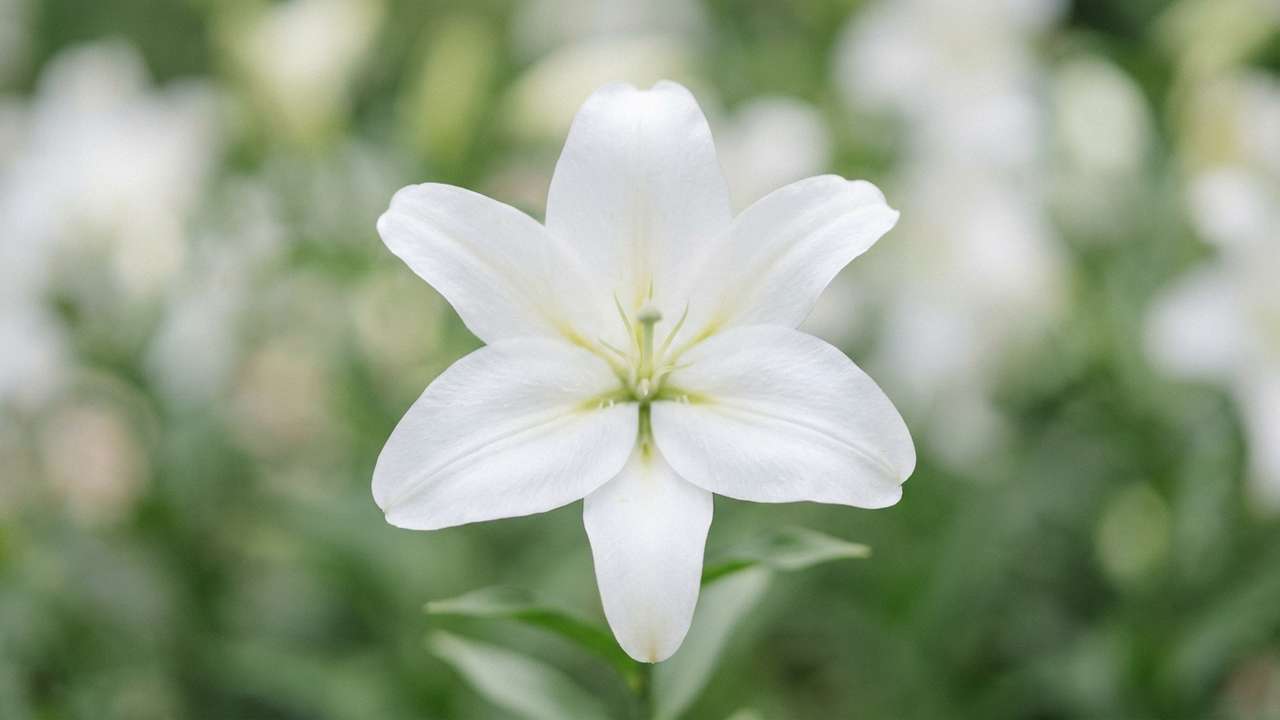
Lilies symbolize purity, innocence, renewal, devotion, and the passage of the soul from one stage of life to the next, which makes them one of the most meaning-dense flowers in human history. When people ask what do lilies symbolize, they are usually looking for one answer, but the honest answer is that this flower carries a small library of meanings that shifts depending on its color, its species, the culture using it, and the occasion it appears in. That flexibility is exactly why lilies appear at weddings and funerals in the same week without anyone thinking it strange.
This guide walks through the full picture. You will learn the core meanings that most readers are looking for first, then the historical roots of those meanings, the religious and spiritual layers, the way color and species change everything, how different cultures read the same flower in opposite ways, and what lilies mean in real situations such as a wedding bouquet, a sympathy arrangement, or a tattoo. You will also get a clear look at the most common misunderstandings, because lily symbolism is full of them.
The Core Meaning of Lilies: Purity, Innocence, and Renewal
The lily’s primary meaning is purity, and almost every other meaning grows out of that single idea. A lily symbolizes purity, innocence, and the renewal of life, and every other meaning it carries is a variation on that foundation. The flower’s white petals, upright trumpet shape, and clean scent have made it a natural stand-in for everything untouched, honest, and starting fresh.
Purity and Innocence
The white lily represents moral purity, sincerity, and innocence in Western symbolism. Brides carry it, artists place it in the hands of saints, and poets use it as shorthand for a clean heart. This association is so old and so consistent that the lily became the default flower for anything meant to look untouched or virtuous.
Renewal, Rebirth, and Hope
The lily represents renewal because it grows from a bulb that appears dead through winter and then produces a tall, living stem in spring. That cycle gave the flower a natural link to rebirth, resurrection, and second chances. This is the meaning behind the Easter lily and behind many sympathy arrangements, where the flower quietly says that life continues after loss.
Devotion, Fertility, and Motherhood
Because the lily produces many seeds and multiplies readily, it also symbolizes fertility, motherhood, and devoted love. Ancient cultures connected it to mother goddesses and to marriage, and that thread survived into modern wedding traditions. A lily given to a new mother carries this meaning most directly.
Here are the four meanings that sit at the center of lily symbolism:
- Purity: cleanliness of heart, honesty, innocence
- Renewal: rebirth, resurrection, fresh starts, hope after grief
- Devotion: loyal love, commitment, faithfulness
- Fertility and motherhood: new life, family, nurturing
The Historical Origins of Lily Symbolism
Lily symbolism began in the ancient Mediterranean and spread outward through religion, art, and heraldry over roughly three thousand years. The flower did not start as a symbol of purity in a church. It started as a symbol of divine power and fertility, and the meaning softened and shifted as it moved through different civilizations.
The earliest known lily imagery comes from Minoan Crete, where frescoes and pottery painted around 1500 BCE show the flower in religious and royal scenes. In Greek myth, the lily was linked to Hera, the goddess of marriage and motherhood, and to Aphrodite, the goddess of love. Roman culture carried lilies into wedding garlands and festival crowns, where they stood for hope and chastity. Early Christians then adopted the flower and gave it its most durable role, as the flower of the Virgin Mary. By the Middle Ages, a stylized lily had become the fleur-de-lis of European heraldry, and by the Victorian era the flower had been folded into floriography, the coded language of flowers.
| Period or Tradition | How the Lily Was Used | Core Meaning |
|---|---|---|
| Minoan Crete, around 1500 BCE | Painted on frescoes and pottery in religious scenes | Divine power, fertility, royal status |
| Ancient Greece | Linked to Hera and Aphrodite in myth and art | Motherhood, love, purity |
| Ancient Rome | Woven into wedding garlands and festival crowns | Hope, chastity, abundance |
| Early Christianity | Placed in images of the Virgin Mary and the Archangel Gabriel | Purity, annunciation, resurrection |
| Medieval Europe | Used in coats of arms as the fleur-de-lis | Royal authority, faith, nobility |
| Victorian era | Used in floriography, the language of flowers | Coded messages of modesty and sweetness |
Horticultural histories also credit the Easter lily’s rise in the United States partly to a returning soldier, Louis Houghton, who reportedly brought a suitcase of lily bulbs from Japan to Oregon in 1919 and shared them with local growers. Whether the suitcase detail is exact or not, the broader point stands: the flower’s meaning traveled with the people who grew it.
Lily Symbolism in Religion and Spirituality
Lilies carry religious meaning in several traditions, and in each one the flower stands for the purest form of what that tradition values. Religion is where lily symbolism became fixed and formal, which is why so many of the flower’s modern meanings trace back to sacred art rather than to everyday life.
- Christianity: The lily is the flower of the Virgin Mary and a symbol of resurrection. The Easter lily in particular represents Christ’s return to life and the hope that follows it.
- Judaism: The lily appears in the Song of Songs as an image of beloved beauty, and it decorated ancient Judean coinage as a national and religious emblem.
- Buddhism and Eastern spirituality: White lilies and water lilies represent purity that rises above a muddy world, plus spiritual awakening and calm.
- Ancient Greek and Roman religion: The lily honored Hera and Aphrodite, tying the flower to marriage, motherhood, and love.
- Modern spirituality: Many people treat the lily as a symbol of the soul’s journey, of grief transformed, and of peaceful transitions.
The Lily in Christian Art
The Archangel Gabriel holds a lily in most paintings of the Annunciation, and Mary is often shown receiving or holding one. In this setting the flower means untouched purity and divine favor at the same time. Later Christian art added another layer by placing lilies at the tomb, where they signal resurrection rather than grief alone.
The Lily in Buddhist and Water Lily Imagery
Buddhist traditions favor the water lily and the lotus, both of which grow out of mud and open clean above the surface. The meaning here is not about being untouched by the world. It is about rising through difficulty and coming out clear, which makes this reading of the lily more about resilience than about innocence.
What Lily Colors and Varieties Mean
Lily color determines the flower’s message more than almost any other factor. A white lily and a red lily come from the same family, but they say completely different things, and sending the wrong one can be an awkward mistake.
| Color | Primary Meaning | Best Given For |
|---|---|---|
| White | Purity, innocence, sympathy, remembrance | Weddings, funerals, religious occasions |
| Pink | Admiration, femininity, prosperity, gentle affection | Congratulations, Mother’s Day, friendship |
| Red | Passion, deep love, desire | Romantic partners, anniversaries |
| Yellow | Happiness, gratitude, friendship, new beginnings | Thank you gifts, get well wishes, housewarmings |
| Orange | Confidence, energy, ambition, warmth | Promotions, encouragement, bold statements |
| Purple | Royalty, dignity, admiration, respect | Formal events, honoring someone |
| Dark or near-black cultivars | Mystery, farewell, elegant mourning | Dramatic arrangements, formal sympathy work |
How Species Change the Meaning
Species matters as much as color, and several flowers called lilies are not true lilies at all. Knowing the difference helps you send the right message.
- Easter lily (Lilium longiflorum): white, trumpet-shaped, and the classic symbol of resurrection and spring hope
- Calla lily (Zantedeschia): not a true lily; stands for elegance and magnificent beauty, and is used at both weddings and funerals
- Tiger lily (Lilium lancifolium): stands for pride, confidence, and wealth, though some Victorian flower dictionaries read it as fierce or unattainable love
- Lily of the valley (Convallaria majalis): not a true lily; means the return of happiness, humility, and sweetness, and it is the traditional birth flower for May
- Daylily (Hemerocallis): not a true lily; in Chinese tradition it is known as the flower that helps you forget your sorrows
- Peace lily (Spathiphyllum): not a true lily; symbolizes peace and sympathy, and it is toxic to cats and dogs if chewed
- Stargazer lily: a pink Oriental hybrid that means ambition and admiration
Lily Symbolism Across Different Cultures
Lily symbolism differs sharply by culture, and in several countries the same flower that means celebration in one place means mourning or bad luck in another. This is the single most important thing to check before you send lilies to someone from a different tradition.
- France: The fleur-de-lis, a stylized lily, has represented French royalty and national identity for centuries and still appears in flags, coats of arms, and logos
- Italy: The white lily is the emblem of Florence, where it appears as the giglio, and it also carries religious meaning tied to the Annunciation
- China: The lily is called baihe, which sounds close to a phrase meaning a hundred years of harmony, so it is a favored wedding flower representing lasting union and good fortune
- Japan: White lilies frequently appear at funerals and memorials, and giving them for a happy occasion can be seen as inappropriate
- Parts of Europe and the United States: Some households avoid keeping lilies indoors because an old superstition links the flower’s strong scent to death and bad luck
- Mexico and Latin America: White lilies are strongly tied to funerals, saints’ days, and religious observance
- India: White lilies appear in temple offerings and devotional arrangements, where they represent purity and respect
That negative European superstition is worth stating plainly. Many people grew up hearing that lilies in the house bring misfortune, usually because the flower was so common at funerals and because its heavy perfume filled sickrooms. The belief is folk tradition rather than fact, but it is real enough that some gift recipients will notice.
What Lilies Mean in Everyday Situations
Lilies change meaning depending on where they appear, so the same flower can communicate congratulations, condolence, or commitment in a single weekend. Reading the situation correctly is what makes the flower work.
Imagine a friend who just lost a parent. You send a white lily arrangement with a short note. In that context the flower says sympathy, respect, and the hope that the person’s spirit is at peace. Now imagine the same white lilies arriving at a wedding. There they say purity and a fresh start. The flower did not change; the moment did.
- Weddings: commitment, purity, and a new beginning
- Funerals and memorials: sympathy, remembrance, and the soul’s return to peace
- Easter and spring celebrations: resurrection, hope, and life renewing itself
- Birth and new baby gifts: fertility, motherhood, and new life
- Romantic gestures: red and pink lilies signal passion and admiration
- Apologies and thank you gifts: yellow and white lilies offer sincerity and gratitude
- 30th wedding anniversaries: the lily is the traditional flower for this milestone
- Tattoos: people choose lilies to mark purity, rebirth after a hard period, remembrance of someone lost, or a fresh start
Common Misconceptions About Lily Symbolism
Lily symbolism attracts more confusion than most flower meanings, mostly because many flowers called lilies are not lilies and because a few old idioms have muddied the water. Clearing these up makes the rest of the symbolism much easier to use.
- Misconception: the lily always means death. White lilies are common at funerals, but the flower’s core meaning is renewal and purity, and it appears at joyful events constantly
- Misconception: all lilies are the same flower. Calla lilies, peace lilies, water lilies, and daylilies belong to entirely different plant families
- Misconception: the lily and the lotus are interchangeable. They overlap spiritually, but the lotus carries deeper meaning in Buddhism and Hinduism, while the lily dominates Western and Christian symbolism
- Misconception: the fleur-de-lis is a lily. Botanists generally believe the design descends from the iris, even though the French name means lily flower
- Misconception: the phrase lily-livered describes a flower. It means cowardly, based on an old belief that a pale liver signaled a lack of courage
- Misconception: gilding the lily is a compliment. The phrase, adapted from Shakespeare, criticizes the act of decorating something already beautiful and ruining it in the process
- Misconception: yellow lilies always mean friendship. Some Victorian flower dictionaries read yellow lilies as falsehood or unrequited love, so the meaning depends on which tradition the recipient follows
Frequently Asked Questions About Lily Symbolism
What do white lilies symbolize?
White lilies symbolize purity, innocence, sympathy, and spiritual renewal. They are the standard choice for funerals, weddings, and religious ceremonies, and they carry the broadest range of meanings of any lily color.
Do lilies mean death?
Lilies do not inherently mean death, but they are strongly associated with funerals in many cultures, especially in Japan, Mexico, and parts of Europe. In that context they signal remembrance and a peaceful passing rather than death itself.
Are lilies a romantic flower?
Yes, red and pink lilies are romantic. Red lilies express passion and deep love, while pink lilies express admiration and gentle affection. Yellow lilies, by contrast, are usually read as friendship or gratitude rather than romance.
Why are lilies popular at both weddings and funerals?
Lilies work at both because they carry two meanings at once: purity and renewal. At a wedding, purity and a new beginning apply. At a funeral, renewal and the continuation of the soul apply. One flower, two readings of the same core idea.
What is the difference between lily symbolism and lotus symbolism?
Lily symbolism centers on purity, devotion, and resurrection, with heavy Christian and Western influence. Lotus symbolism centers on enlightenment and rising above suffering, with roots in Buddhism and Hinduism. They overlap in the idea of purity, but they developed separately.
What does a lily tattoo mean?
A lily tattoo usually means purity, rebirth after a difficult chapter, remembrance of someone who died, or personal growth. The color chosen in the design narrows the meaning, so a white lily tattoo reads very differently from a red one.
Which lily color should you send for sympathy?
White lilies are the safest and most traditional choice for sympathy. White calla lilies and white Oriental lilies both work well, and the arrangement should avoid bright reds and oranges, which read as celebratory.
What anniversary is associated with lilies?
The lily is the traditional flower for a 30th wedding anniversary. Many couples also choose lilies for earlier anniversaries when purity, devotion, or renewal matches the tone they want.
Why Lily Symbolism Still Matters Today
Lily symbolism remains relevant because it gives people a way to say difficult things without spelling them out. A white lily at a funeral says what a mourner cannot quite put into words. A pink lily at a wedding celebrates a new life together. A yellow lily handed to a friend says thank you, plainly and warmly, without a card.
The meanings have held for three thousand years and continue to shift with new colors, new hybrids, and new cultural mixes. Understanding what lilies symbolize lets you send the right message on purpose rather than by accident, and it lets you read the messages other people send to you. Next time you see a lily, you will know exactly what that flower is saying, and you will know which of its many meanings fits the moment.