
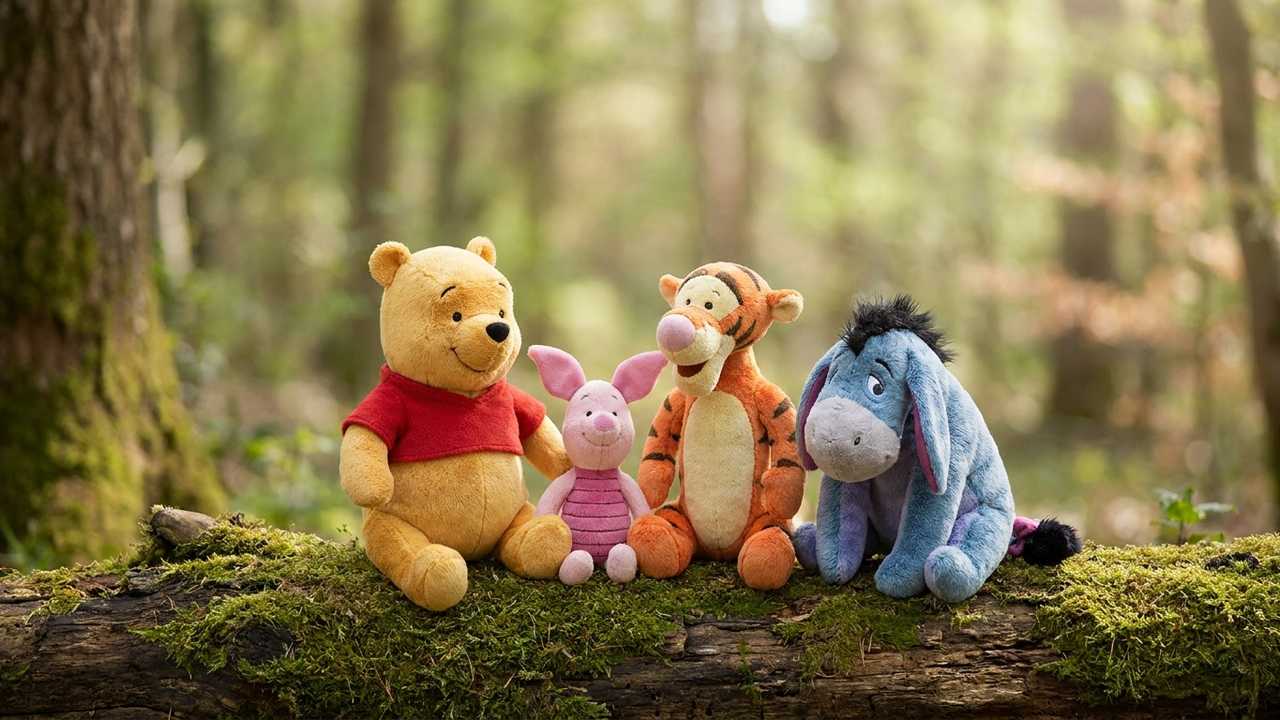
The characters of Winnie the Pooh symbolize the full spectrum of human personality and emotion, with each animal in the Hundred Acre Wood standing for one recognizable trait that readers see in themselves and in the people around them. Pooh carries simple contentment, Piglet carries quiet courage, Eeyore carries melancholy, and Tigger carries restless energy. Because these symbols are so easy to recognize, the question of what do the characters of winnie the pooh symbolize has become one of the most searched topics about children’s literature, psychology, and pop culture.
This guide answers that question completely. It explains the core meaning of each character, shows how the symbols connect to psychology and the four temperaments, traces where the meanings came from in the real life of author A. A. Milne, explores the philosophical and spiritual readings of the Hundred Acre Wood, and looks at how the symbolism shifts across cultures and adaptations. By the end, you will be able to read the stories on two levels at once, as gentle adventures and as a map of human nature.
What the Characters of Winnie the Pooh Symbolize in Simple Terms
The characters of Winnie the Pooh symbolize personality types and emotional states rather than real animals, and that is the foundation of everything else in the stories. A. A. Milne did not write about wildlife. He wrote about the small group of friends his son Christopher Robin played with, and each friend behaves the way one kind of person behaves. The bear is not a bear in the biological sense. The bear is a way of being in the world.
Each character represents a single dominant trait, and together those traits form a complete picture of a healthy, imperfect community. That is the key sentence to remember. Pooh is not meant to be admired above the others, and Eeyore is not meant to be pitied. Each one is necessary, and the group only works because the traits balance each other.
The most common symbolic readings of the main characters are these:
- Winnie the Pooh symbolizes simplicity, kindness, and the ability to enjoy small pleasures such as honey and friendship.
- Piglet symbolizes anxiety that does not stop a person from being brave.
- Eeyore symbolizes sadness, low self-esteem, and the quiet dignity of living with ongoing gloom.
- Tigger symbolizes joy, impulsiveness, and enthusiasm that sometimes causes accidents.
- Rabbit symbolizes order, planning, and the irritation that comes when plans are disrupted.
- Owl symbolizes intellectual pride, the gap between knowledge and wisdom, and the confidence of someone who is not always right.
- Kanga and Roo symbolize nurturing care and the fearless curiosity of early childhood.
- Christopher Robin symbolizes imagination, childhood itself, and the adult person the child eventually becomes.
- The Hundred Acre Wood symbolizes a small, safe world where a person can grow, make mistakes, and always find friends.
Notice that none of these symbols is negative on its own. Even Eeyore, the most pessimistic character, is loyal, honest, and deeply loved by his friends. That balance is why the books still work as gentle teaching tools about tolerance.
The Main Characters and the Human Traits They Represent
The main characters and the human traits they represent form a symbolic system rather than a random cast, because each animal fills a specific emotional role in the group. Pooh is the centre of affection, Piglet is the nervous conscience, Eeyore is the voice of realism, Tigger is the engine of chaos, Rabbit is the manager, and Owl is the self-appointed expert. When you map them side by side, the group reads like a small society.
The table below shows the symbolic value of each character and a classic moment that proves the reading.
| Character | Symbolizes | Classic Moment That Shows It |
|---|---|---|
| Winnie the Pooh | Simplicity, kindness, gentle appetite for life | He invents the game of Poohsticks and shares his last honey with Eeyore on his birthday |
| Piglet | Fear overcome by loyalty | He goes to face the Heffalump trap and later stands at the edge of the flood to help Pooh |
| Eeyore | Melancholy, low self-worth, quiet endurance | His house falls down and he thanks his friends anyway when they rebuild it |
| Tigger | Unlimited energy, impulsiveness, belonging | He bounces everyone before he learns that friends can be hurt by carelessness |
| Rabbit | Control, order, anxiety about losing control | He plans the capture of the Backson and tries to organize everyone’s behaviour |
| Owl | Prestige, misremembered knowledge, authority | He confidently spells “Tuesday” as “Twosday” and then asks for help |
| Kanga | Protective motherhood, patience | She keeps her composure while Rabbit and the others scheme about Roo |
| Roo | Curiosity, fearless childhood, growth | He explores everything and grows from a pouch baby into an independent child |
| Christopher Robin | Imagination, childhood, the keeper of the world | He leaves for school at the end of the final chapter, and the wood changes forever |
| Heffalumps and Woozles | Imaginary fears, the unknown | They never fully appear, yet they drive most of the characters’ nightmares |
Two of these characters deserve a closer look. Owl and Rabbit were not based on toys at all, because Milne invented them for the stories, so their symbolism is purely literary. Every other main animal began as a real stuffed toy that Christopher Robin Milne owned, which means their symbolic value grew out of a real child’s play.
Winnie the Pooh Characters as Psychological Archetypes and Temperaments
The characters of Winnie the Pooh work as psychological archetypes because they map neatly onto the four classical temperaments that doctors and philosophers used for over two thousand years. The sanguine type is cheerful and sociable, the choleric type is energetic and forceful, the melancholic type is reflective and sad, and the phlegmatic type is calm and steady. Pooh and Tigger carry the sanguine weight, Rabbit carries the choleric side, Eeyore carries the melancholic, and Piglet carries a nervous mix of phlegmatic caution and anxious dread.
Modern readers often extend this mapping into personality frameworks. The exact labels differ depending on the writer, but the pattern repeats again and again, and that repetition is what makes the symbolism feel true.
- The cheerful receiver: Pooh takes the world as it comes, is easily distracted by food, and rarely plans beyond the next hour.
- The anxious caretaker: Piglet watches for danger, worries about everyone else, and surprises himself with courage when a friend needs him.
- The melancholy realist: Eeyore expects the worst, states it plainly, and continues anyway, which many readers describe as a portrait of depression that still functions.
- The enthusiastic adventurer: Tigger acts first and thinks later, then learns that joy and self-control can coexist.
- The anxious organizer: Rabbit needs rules, hates surprises, and is often the person who actually fixes the problem.
- The overconfident intellectual: Owl confuses knowledge with wisdom and is gently mocked for it, a symbol that reads as satire of self-appointed experts.
- The stable caregiver: Kanga stays calm, teaches boundaries, and represents reliable love.
Psychologists and therapists have used these characters as metaphors for years, and the practice is popular because a cartoon animal is a safe way to start a difficult conversation. A patient who says “I feel like Eeyore today” is saying something real without having to use clinical language.
The Historical Origin of the Symbols: Real Toys, Real Places, Real Shadows
The symbolic meaning of the characters has a historical origin in the real life of A. A. Milne and his son, because every major symbol in the books began as a physical object or a real place. Understanding that history explains why the symbolism feels honest rather than invented.
How a Real Bear Named Winnipeg Became the Symbol of Simplicity
Christopher Robin Milne owned a teddy bear bought at Harrods in London, originally named Edward. He renamed it Winnie after a black bear called Winnipeg that lived at London Zoo. That bear had been brought from Canada by a veterinary officer, Harry Colebourn, during the First World War. The second part of the name came from a swan the family met on holiday, which they called Pooh. The bear therefore symbolizes a child’s affection for a real animal, not a fairy-tale creature.
The Stuffed Animals That Became Characters
- Winnie the Pooh began as Christopher Robin’s teddy bear.
- Piglet began as a small stuffed pig.
- Eeyore began as a stuffed donkey.
- Tigger, Kanga, and Roo were later additions to the toy collection.
- Owl and Rabbit were invented by Milne and have no toy origin.
- The original toys are held today at the New York Public Library.
Ashdown Forest and the Real Hundred Acre Wood
The Hundred Acre Wood is based on Ashdown Forest in East Sussex, where the Milne family owned a country home. The forest contains a real Five Hundred Acre Wood, and the bridge where the Poohsticks game is said to have begun still draws visitors. This matters symbolically because the stories present an ordinary landscape as magical, which reinforces the idea that a child’s neighbourhood is already an entire world.
How the First World War Shaped the Gentle World
Milne served in the First World War and wrote the Pooh books in the 1920s. Many biographers and critics suggest that the peaceful, protected wood was a deliberate answer to the violence he had witnessed, which would make the setting itself a symbol of refuge. This reading is interpretive rather than proven, but it explains why so many readers find the books comforting rather than merely funny.
Spiritual and Philosophical Meanings of the Hundred Acre Wood
The Hundred Acre Wood carries spiritual and philosophical meanings in several popular readings, most famously in the Taoist interpretation. Benjamin Hoff’s book The Tao of Pooh, published in 1982, argues that Pooh behaves like a Taoist sage, while his friend Piglet represents virtue in practice. Hoff followed it with The Te of Piglet in 1992, expanding the idea that small acts of kindness carry great power.
The table below shows how the most common philosophical readings assign meaning to each character.
| Reading | Central Character | What the Character Represents |
|---|---|---|
| Taoism (Hoff) | Pooh | The uncarved block, natural simplicity, doing without forcing |
| Taoism (Hoff) | Piglet | Personal virtue, courage expressed through small actions |
| Western philosophy (Williams) | Pooh | A gentle everyman who stumbles into philosophical truths |
| Satire of criticism (Crews) | The whole cast | A playful parody of scholars who overanalyse literature |
| Mindfulness reading | Pooh and Piglet | Attention to the present moment, appreciation of ordinary things |
John Tyerman Williams published Pooh and the Philosophers in 1995 and claimed, half seriously, that the bear covers the whole history of Western thought. Frederick Crews had already mocked that habit in The Pooh Perplex in 1963, a book that parodies academic criticism by applying every fashionable theory to the same gentle stories. The joke works because the symbolism is elastic enough to hold almost any interpretation.
A simpler spiritual reading is available to any reader. Pooh lives in the moment, shares what he has, and does not measure his worth by achievement. That is a teaching about contentment, and it appears in the books long before any scholar wrote about it.
How the Symbolism Changes Across Cultures and Adaptations
The symbolism changes across cultures because different countries adapted the characters in different eras and for different purposes. In the United Kingdom the stories are read as nostalgic literature about a vanished English childhood. In the United States the Disney versions turn the same characters into cheerful merchandise and theme park figures, softening the melancholy that Milne wrote into Eeyore. In Russia the characters became something rougher, funnier, and more philosophical.
Three cultural case studies show how far the meanings can shift:
- Russia: Boris Zakhoder’s 1960 translation, known as Vinni-Pukh, inspired Soyuzmultfilm cartoons directed by Fyodor Khitruk between 1969 and 1972. Vinni-Pukh is often read as a scrappy, slightly feral philosopher rather than a cuddly toy.
- Japan: Disney’s Pooh became a major commercial symbol of comfort and friendship, with a huge following among adults as well as children.
- China: From around 2017, images of the characters were widely censored on Chinese social media because internet users used them as political memes, which turned a symbol of innocence into a symbol of resistance for many people outside the country.
A legal change also reshaped the symbolism. The original 1926 book entered the public domain in the United States on 1 January 2022, which allowed new creators to use the Milne version of the characters. The horror film Winnie the Pooh: Blood and Honey, released in 2023, is the clearest result of that change, and it deliberately inverts every gentle meaning the characters used to carry.
Meanwhile, the original illustrations by E. H. Shepard keep the British reading alive. His line drawings are quiet and rural, and they push readers toward nostalgia, while later colourful adaptations push readers toward comedy and adventure. The same bear can symbolize childhood memory in one edition and slapstick friendship in another.
What the Characters Symbolize in Real-World Situations
The characters symbolize different things depending on the situation a reader is living through, which is why the books stay useful across a whole lifetime. A parent reading at bedtime sees a lesson about patience. A teenager sees a story about friendship. An adult in therapy sees a vocabulary for feelings that are hard to name.
Consider three real scenarios. First, a teacher working with a nervous child can point to Piglet and say that being scared and being brave happen at the same time, which gives the child a safe label for anxiety. Second, a person recovering from depression may identify with Eeyore, because Eeyore keeps going, keeps his friends, and is never written off as worthless. Third, a team leader can use the cast as a light-hearted way to describe working styles, with Rabbit as the planner, Tigger as the risk-taker, and Owl as the person who sounds certain without being right.
| Life Situation | Most Useful Symbol | What the Symbol Teaches |
|---|---|---|
| Childhood anxiety | Piglet | Small people can do brave things |
| Low mood or depression | Eeyore | Sadness does not cancel belonging |
| Grief and growing up | Christopher Robin | Endings are part of love, not a failure of it |
| Workplace conflict | Rabbit and Owl | Control and confidence both need humility |
| New friendship | Pooh and Piglet | Sharing ordinary time builds real bonds |
One caution belongs here, because it is the most common mistake readers make. Some online quizzes and articles claim that each character officially represents a specific diagnosed mental illness. That claim is not part of Milne’s writing and not part of any clinical framework. The characters symbolize emotional tendencies that everyone recognizes, and therapists may borrow them as metaphors, but no doctor assigned a diagnosis to a stuffed donkey. Treating the symbols as metaphors keeps them useful, while treating them as medical labels keeps them misleading.
Frequently Asked Questions About Winnie the Pooh Symbolism
Does each Winnie the Pooh character represent a mental illness?
No. Each character represents a personality trait or emotional tendency, such as anxiety, melancholy, or enthusiasm. Popular culture often maps them onto diagnoses for fun, but those mappings are fan interpretations rather than official canon, and no author or clinician created such a system.
What does the Hundred Acre Wood symbolize?
The Hundred Acre Wood symbolizes a small, protected world where a child can explore safely and always return to friends. It also symbolizes the inner world of imagination, because the wood belongs to Christopher Robin and shrinks in importance as he grows up.
Which character carries the most important symbolism?
Winnie the Pooh carries the central symbolism of the stories. He embodies kindness, simplicity, and contentment, and the other characters orbit around him, so his meaning anchors the whole system.
Why is Eeyore often described as a comforting symbol?
Eeyore symbolizes sadness that survives alongside friendship, and many readers find that honest rather than depressing. He complains, he expects disappointment, and his friends keep including him, which suggests that a low mood does not cost a person their place in a community.
Do the characters match the four temperaments?
They match closely enough to be useful. Pooh and Tigger fit the cheerful sanguine type, Rabbit fits the energetic choleric type, Eeyore fits the reflective melancholic type, and Piglet fits the cautious phlegmatic type.
How did the symbolism change after the books entered the public domain?
The 1926 book entered the public domain in the United States on 1 January 2022, which allowed new creators to reuse the characters. Since then, some adaptations have inverted the gentle meanings deliberately, turning symbols of comfort into symbols of horror or satire.
Conclusion: Why These Symbols Still Matter
The characters of Winnie the Pooh symbolize the ordinary range of human feeling, and they do it without cruelty or judgement. Pooh stands for simple contentment, Piglet for courage inside fear, Eeyore for honest sadness, Tigger for unrestrained joy, Rabbit for order, Owl for confidence that needs humility, Kanga for care, Roo for curiosity, and Christopher Robin for the childhood that everyone eventually leaves behind. Together they form a portrait of a community that works precisely because its members are so different.
Understanding this symbolism is worth the effort because it turns a set of bedtime stories into a practical vocabulary for emotions. You can hand a friend a label like “I am having an Eeyore week” and be understood in a single sentence. You can look at your own group of friends and see the Piglet, the Rabbit, and the Tigger among them. The next time you open one of the books, read it twice: once for the honey, and once for the people. The wood is small, but the meanings inside it are as wide as human nature itself.