
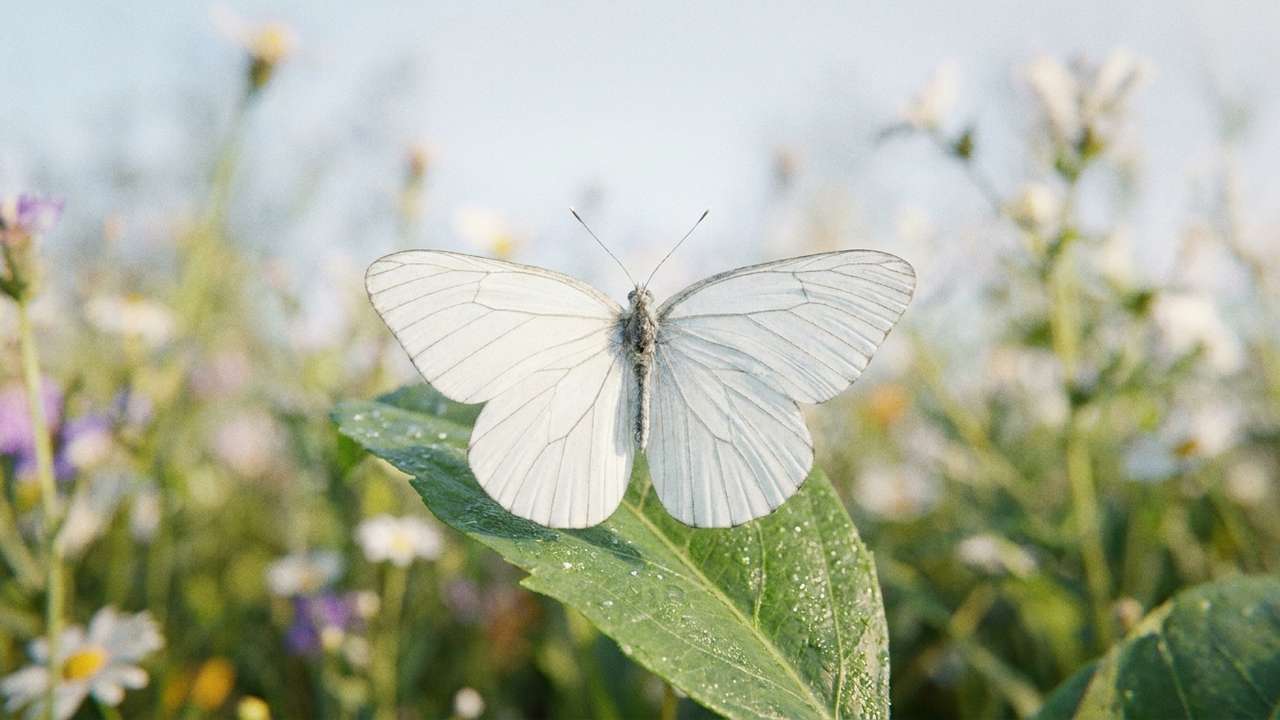
A white butterfly is a small winged insect whose pale wings have carried one of the most consistent symbolic meanings in human culture: purity, renewal, and the quiet presence of a guiding spirit. When people ask what do white butterflies symbolize, they are usually looking for reassurance during a moment of change, loss, or hope, because this delicate creature has been read as a messenger in nearly every tradition that has ever watched it drift across a garden. Understanding that symbolism gives you a way to interpret an experience that feels personal but is also shared across centuries and continents.
This guide walks through the core meaning, the most common interpretations, how different cultures read the same white wings, the spiritual and religious layers, what it means when one appears in a specific situation, and how the meaning shifts with color, species, and form. You will also find the historical roots of the symbol, the misconceptions that confuse people, and clear answers to the questions readers ask most often.
What White Butterflies Symbolize: The Core Meaning
White butterflies symbolize purity, innocence, renewal, and spiritual guidance, and they are most often read as gentle messengers arriving at a moment of transition. The color white carries the meaning, not the species itself; a white butterfly is essentially a blank page on which cultures have written their hopes about beginnings, endings, and everything in between.
The core symbolism of a white butterfly is purity and renewal, delivered as a message that a phase of life is ending and something lighter is beginning. That single idea sits underneath almost every other interpretation you will encounter, from love to grief to luck.
The symbol works on three layers at the same time, and readers usually connect with one of them first.
- Personal layer: the butterfly appears in your own space, so the meaning feels directed at you rather than at the world in general.
- Cultural layer: white wings already carry a shared story about innocence, souls, and new starts before you ever see one.
- Emotional layer: the meaning often matches whatever you were feeling right before it appeared, which is why the same insect can signal comfort to one person and encouragement to another.
The butterfly itself adds its own logic to the symbol. A butterfly does not stay a caterpillar. It dissolves inside a chrysalis and rebuilds itself into something that can fly, which is why the creature has been attached to transformation in cultures that never had contact with each other. White simply sharpens that story toward lightness, clarity, and peace.
The Most Common Meanings of a White Butterfly
A white butterfly most commonly represents purity, love, transformation, hope, and the presence of a spirit watching over you. These five themes appear again and again across folklore, poetry, and personal accounts, and they overlap far more than they compete.
Purity and Innocence
The white color does most of the work here. White has long stood for cleanliness, honesty, and untouched beginnings, so a white butterfly reads as a symbol of a clean slate. People often describe seeing one as a reminder to drop guilt or resentment and start again with a lighter heart.
Love and Loyalty
Because butterflies are associated with the soul and with delicate attachment, a white butterfly frequently signals love that endures. Some people treat a pair of white butterflies as a sign of a strong partnership, while a single one is read as affection arriving from someone absent or far away.
Transformation and New Beginnings
Every butterfly carries the transformation story, and the white version carries it with a gentler tone. A white butterfly during a career change, a move, or the end of a long chapter is commonly interpreted as encouragement: the difficult middle stage of change is normal, and flight comes after it.
Hope After Loss
In grief, a white butterfly is one of the most frequently reported symbols of comfort. Many people describe a white butterfly appearing at a funeral, on an anniversary, or in a garden on an ordinary day and feel it as a quiet hello rather than a coincidence.
Peace and Inner Calm
White also carries stillness. A white butterfly drifting without urgency can be read as an invitation to slow down, breathe, and stop fighting a situation that is already resolving itself.
Here is a practical scenario. Someone leaves a job they loved, spends three uncertain months at home, and one morning sees a white butterfly resting on the windowsill. Nothing supernatural has to happen for the moment to matter. The symbol gives shape to a feeling that was already there, and that shape helps the person decide to apply for the next role.
White Butterfly Meaning in Different Cultures
White butterfly symbolism varies by culture, and the differences are real rather than decorative. In several traditions the white butterfly is welcome, in others it is treated with caution, and in a few it is connected directly to the dead.
| Culture or Region | Core Meaning | How It Is Read |
|---|---|---|
| Japan | Souls and ancestors | Butterflies are linked to the human soul, and white ones are often connected to ancestors returning with goodwill. |
| China | Love and longevity | Butterflies appear in art as companions and symbols of devoted love, while white carries mourning and purity. |
| Slavic and Russian folklore | Souls of the departed | A white butterfly is sometimes described as the soul of a relative visiting the living. |
| Celtic and Irish tradition | Souls moving on | White butterflies are associated with spirits in transition and with gentle protection. |
| Native American traditions | Transformation and messages | Butterflies often carry prayers and represent change, with white adding clarity and peace. |
| Mexico | Returning spirits | Butterflies are tied to ancestral remembrance, and pale butterflies are linked to souls coming back for a visit. |
| Ancient Greece | The soul itself | The word for soul and the word for butterfly were connected, making the insect a symbol of life beyond the body. |
| Parts of Europe | Bad luck or warning | Some old folk beliefs treat a white butterfly indoors or at night as an omen of death or misfortune. |
The negative reading deserves to be stated plainly. Not every tradition greets white wings with comfort. In some European folk beliefs, a white butterfly that enters a house, appears at night, or circles a sickroom was once considered a warning, and a white moth was sometimes treated as a darker omen than a butterfly. If you come from a family that repeats that belief, the meaning you feel will be shaped by it, and that is a legitimate part of the picture rather than a contradiction of the positive reading.
Spiritual and Religious Symbolism of White Butterflies
White butterflies carry spiritual meaning as symbols of the soul, of angels, and of the continuity of life after death. Religions that emphasize the soul tend to read the butterfly as a picture of the body releasing something lighter, and the white color reinforces that picture.
- Christian symbolism: the butterfly is often used as an image of resurrection and the soul leaving the body, and a white one adds purity and divine care. Many people read it as a sign that a prayer has been heard or that a loved one is at peace.
- Buddhism and Hinduism: the butterfly represents impermanence and rebirth, the idea that all things change and return in new form. White adds clarity, detachment, and calm acceptance.
- Islam: butterflies are respected as creatures of beauty within creation, and many believers read a white one as a reminder of mercy and of the small signs placed in the world.
- Celtic and pagan traditions: the butterfly is connected to the soul’s journey and to the fairy world, with white butterflies linked to protection and gentle guidance.
- Spiritual and new age readings: the white butterfly is treated as a sign from the spirit world, often from a deceased loved one, an ancestor, or a guardian presence.
- Reincarnation beliefs: in several traditions the butterfly is the clearest image of a soul returning in a new form, and white signals a peaceful return.
Across all of these, one pattern holds: the butterfly is never the message itself, it is the envelope. The meaning people take from it depends on what they were already carrying when it arrived.
What It Means When a White Butterfly Appears in Specific Situations
Context changes the meaning of a white butterfly more than the butterfly itself does. Where it appears, when it appears, and what you were doing at that moment all shape how the symbol reads.
A White Butterfly Lands on You
When a white butterfly lands on your hand, shoulder, or head, the common reading is direct attention. The symbol is no longer general; it feels addressed to you. Many people take it as confidence, comfort, or a push toward a decision they have been avoiding.
A White Butterfly Visits Your Home or Garden
A white butterfly in your garden usually signals peace and a healthy environment, and spiritually it is read as a household blessing. A white butterfly inside the house carries more weight in some traditions, where it is either a visit from a loved one or, in older European belief, a warning.
A White Butterfly Appears After a Loss
At a funeral, on the anniversary of a death, or in the days after saying goodbye, a white butterfly is most often interpreted as a loving presence. This is one of the strongest and most reported experiences connected to the symbol.
A White Butterfly at a Wedding
At a wedding, white wings reinforce purity, commitment, and good fortune for the couple. Some people plan for it deliberately by releasing white butterflies, though the meaning is strongest when the appearance is unplanned.
A White Butterfly During Pregnancy or a Big Change
During pregnancy, a white butterfly is commonly read as a blessing on the new life and on the mother. During a career move, a breakup, or a relocation, it is read as encouragement to continue.
- Appears at dawn: a fresh start and quiet optimism.
- Appears at dusk: reflection on something ending peacefully.
- Circles you repeatedly: a persistent message asking for attention.
- Appears in winter or indoors out of season: a stronger, more personal sign in most traditions.
How the Meaning Changes With Color, Species, and Form
The meaning of a butterfly shifts with its color, because each color carries its own symbolic weight on top of the shared butterfly story. White is the lightest reading of the group, focused on purity, peace, and gentle news.
| Butterfly Color | Primary Meaning | Mood |
|---|---|---|
| White | Purity, renewal, spiritual presence | Calm and comforting |
| Yellow | Joy, optimism, creativity | Bright and encouraging |
| Black | Mystery, endings, deep transformation | Serious and introspective |
| Blue | Truth, communication, emotional clarity | Serene and open |
| Orange | Energy, passion, ambition | Warm and motivating |
| Brown or muted | Grounding, patience, practical matters | Steady and quiet |
White Butterfly Versus White Moth
A white butterfly and a white moth are not the same symbol. Butterflies are generally active in daylight and are read as hope and renewal. Moths are night creatures, so in older folklore a white moth was often treated as a heavier omen, sometimes connected to death or to spirits that linger. If you are unsure which one you saw, the time of day is usually the fastest clue.
One White Butterfly Versus Two
A single white butterfly is usually read as a personal message or a beginning. Two together are read as partnership, reunion, or love that has returned. A group of white butterflies is read as abundance and forward motion rather than a single sign.
Small White Species and Their Names
Species names carry extra symbolism for people who look them up. The cabbage white, often simply called the white butterfly, is the most familiar garden species and is linked to ordinary, everyday blessings. In parts of Asia, white butterflies connected to specific local species carry ancestor meanings, while in Europe the same wings may connect to the souls of the departed.
Where White Butterfly Symbolism Comes From
The white butterfly symbol has historical roots rather than a single origin point, and most of its meanings grew independently in cultures that shared no contact. Understanding the roots explains why the symbol feels so universal.
Ancient Greece supplies one of the clearest threads. The Greek word for soul and the Greek word for butterfly were linked, and the image of a soul with wings ran through poetry, art, and funeral custom. That single idea spread into Roman thought, then into European art, and eventually into the modern habit of reading a butterfly as a sign of someone who has passed.
In Japan, butterflies carried overlapping meanings of transformation and ancestral presence, with white wings often tied to spirits returning in peace. In China, butterflies appeared in art and literature as companions and symbols of devoted love, while white carried the separate weight of purity and, in some contexts, mourning.
In Europe, medieval and later folklore attached butterflies to witches, fairies, and souls, depending on the region. By the Victorian era, the butterfly had become a popular emblem of the fleeting nature of life, pressed into jewelry, mourning art, and poetry. That era cemented the butterfly as a sentimental symbol, which is close to how most people read it today.
- Greece: the soul with wings.
- Japan and China: ancestors, love, and transformation.
- Celtic lands: spirits in transition and gentle protection.
- Victorian Europe: the shortness of life and sentimental remembrance.
- Modern spirituality: personal signs and messages from the other side.
Common Misconceptions About White Butterfly Symbolism
Several popular beliefs about white butterflies are simply inaccurate or overextended, and clearing them up makes the symbol easier to use honestly. None of these corrections takes away the comfort the symbol provides; they just keep it grounded.
- Misconception: a white butterfly always means death. Reality: it usually means renewal or comfort, and the darker reading exists only in some older European folk beliefs.
- Misconception: white butterflies are a single universal sign. Reality: the meaning changes by culture, and in some places it is welcome while in others it is treated with caution.
- Misconception: the butterfly chose you specifically. Reality: butterflies follow light, scent, and flowering plants, so their movement has physical causes even when the timing feels meaningful.
- Misconception: a white butterfly and a white moth carry the same meaning. Reality: they are separate symbols, and folklore treats them differently.
- Misconception: only spiritual people can read the sign. Reality: the symbol works as a personal reminder of hope whether or not you attach a religious meaning to it.
- Misconception: seeing one guarantees good luck. Reality: most traditions read it as encouragement or comfort rather than as a promise of an outcome.
A useful way to hold all of this: the white butterfly is a prompt, not a prediction. It invites you to notice what you were thinking about and decides nothing on its own.
Frequently Asked Questions About White Butterfly Symbolism
What does it mean when a white butterfly follows you?
A white butterfly that stays near you or circles repeatedly is usually read as a persistent message. Most people interpret it as a reminder to pay attention to a decision, a relationship, or a feeling they have been pushing aside.
Is a white butterfly a sign from a deceased loved one?
Many people treat it that way, and the belief is common across cultures. There is no way to verify the claim, so it is best understood as a personal source of comfort rather than a fact that applies to everyone.
Are white butterflies lucky?
In most traditions a white butterfly is a positive sign connected to renewal, love, and peace. The exception is certain older European folk beliefs, where a white butterfly indoors or at night was seen as a warning.
What does a white butterfly at night mean?
A white butterfly at night is unusual, since most butterflies are active during the day. In folklore, a pale winged visitor after dark is more often a moth, and older European beliefs connected that to spirits or to an omen. If it was truly a butterfly, many readers take it as a stronger, more personal sign simply because it happened out of the ordinary.
Does the white butterfly meaning change with the season?
Yes, in practice it does. Spring sightings are read as new beginnings, summer ones as abundance and growth, autumn ones as peaceful endings, and winter or indoor sightings as rare and personal messages.
What is the difference between white butterfly symbolism and white moth symbolism?
White butterflies symbolize daytime hope, purity, and renewal. White moths carry night symbolism, and because of that they are linked more often to mystery, endings, and in some traditions death. Color alone does not decide the meaning; the creature and the hour do.
What does it mean if a white butterfly lands on a bride?
It is read as a blessing on the marriage, with purity, loyalty, and gentle good fortune attached to the couple. Many people treat it as one of the luckiest versions of the symbol.
Can a white butterfly be a bad sign?
Yes, in a limited number of traditions. Some European folklore treats a white butterfly inside a home, hovering near a sick person, or appearing at night as unfortunate. Everywhere else it is read positively.
Final Thoughts on the Meaning of White Butterflies
White butterflies symbolize purity, renewal, love, hope, and the quiet sense that something or someone is watching over you. The meaning holds across cultures because the butterfly itself carries transformation in its body, and the color white carries lightness, so the two combine into a symbol that fits both happy and difficult moments. The variations matter too: a white butterfly is not a white moth, a single one is not a pair, and a welcome sign in one tradition can be a warning in another.
If a white butterfly has appeared in your life, the most useful thing you can do is notice what you were thinking about at that moment. The symbol has never been about predicting the future. It is about pausing, letting a small and beautiful thing remind you that change is normal, and deciding what you want to do next. Keep your eyes open, because the next one may show up exactly when you need the reminder.