
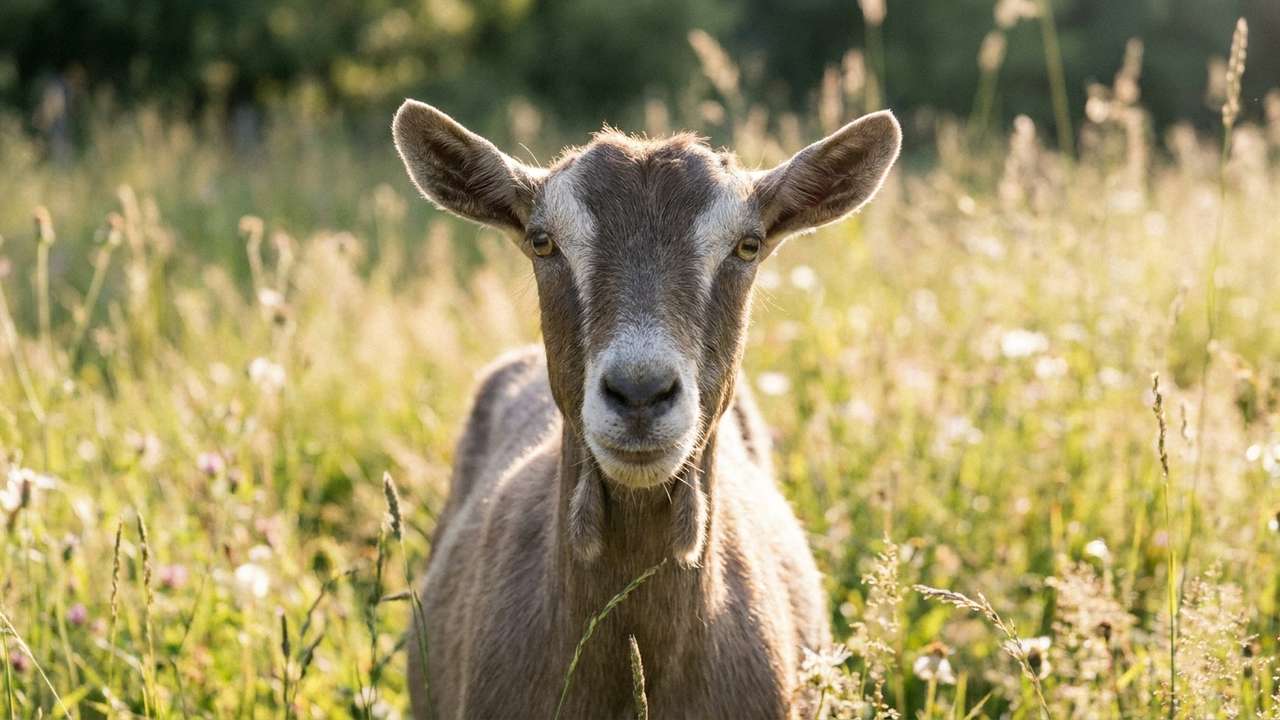
A goat symbolizes fertility, vitality, independence, sacrifice, and, in many traditions, sin and blame. That single sentence captures the tension that makes the goat one of the richest animal symbols in human culture: a modest farm animal that also stands on temple altars, spins around the zodiac wheel, and appears in the iconography of the devil.
When a reader asks what does a goat symbolize, the honest answer depends on the setting. A goat painted on a Greek vase carries a different message from a goat marching through a Lunar New Year parade, and a goat in a modern sports headline means something else again. This guide walks through the core meanings, the cultural variations, the historical origins, the spiritual readings, the different types of goats and how each one shifts the meaning, the darker side of the symbol, and the questions readers ask most often. By the end, the goat stops being just an animal and becomes a map of how cultures think about nature, desire, provision, and guilt.
Definition and Core Meaning of Goat Symbolism
The goat symbolizes fertility, provision, independence, and sacrifice, and its most common meaning across world symbolism is abundance produced by a hardy, self-reliant animal. A goat turns rough, rocky land into milk, meat, and fiber, and that practical fact sits underneath almost every symbolic reading of the animal.
Symbolism usually starts with behavior. A goat climbs where other livestock cannot, browses on a wide range of plants, breeds quickly, and keeps producing milk even in poor conditions. Humans noticed those traits long before anyone wrote them down, and each trait turned into a meaning. The goat is therefore an entity with a dual attribute: it is both a provider and a burden-bearer.
- Fertility and abundance: goats breed quickly and give milk in quantity, so they became emblems of increase, prosperity, and the generosity of nature.
- Independence and curiosity: a goat explores, climbs, and escapes enclosures, so it stands for self-reliance and a refusal to be fenced in.
- Sure-footedness and resilience: mountain goats balance on narrow ledges, so the animal represents confidence on dangerous ground.
- Sacrifice and atonement: goats were the most common offering animal in the ancient Mediterranean and Near East because they were valuable but replaceable.
- Guilt and blame: the scapegoat carries the sins of others into the wilderness, which gives the goat its darker, burdened meaning.
- Appetite and instinct: male goats in rut behave loudly and aggressively, so Greek and later European art linked the goat to desire and untamed drives.
The practical rule is simple. If the goat appears with a herd, a harvest, or a household, the meaning runs positive and points to prosperity. If the goat appears alone, in a ritual, or beside a figure of authority, the meaning usually points to sacrifice, judgment, or blame.
Cultural Meanings of the Goat Around the World
The goat carries a warm, positive meaning in most pastoral and agricultural cultures and a sharply negative meaning in several European and Abrahamic traditions. That split is the single most important fact to remember, because it explains why the same animal can symbolize both a blessing and a curse.
| Culture or tradition | Main meaning of the goat | Context |
|---|---|---|
| Ancient Greece | Fertility, wild nature, drama | The goat Amalthea nursed the infant Zeus; Pan and the satyrs are goat-like figures |
| Norse mythology | Strength, provision, abundance | Thor’s goats pull his chariot and are eaten and reborn; the goat Heidrun produces mead in Valhalla |
| Ancient Egypt | Creation and craftsmanship | Khnum, the ram-headed god, shaped human beings on a potter’s wheel |
| Judaism | Atonement and release | The scapegoat of Leviticus 16 carries the sins of the community into the wilderness |
| Christianity | Separation and judgment | The parable of the sheep and the goats separates the righteous from the condemned |
| Islam | Obedience, sacrifice, charity | Qurbani at Eid al-Adha; one goat serves as the offering for one person |
| Chinese culture | Peace, filial piety, good fortune | The goat is the eighth animal of the zodiac, and its written character shares a component with the character for auspiciousness |
| Scandinavian folklore | Christmas and protection | The Yule goat, originally tied to Thor’s goats, survives as a straw ornament |
| Modern Western slang | Excellence | GOAT stands for Greatest Of All Time |
In Chinese tradition the goat and the sheep share a single written character, so the animal absorbs the gentle qualities of both: calm, harmony, and family loyalty. In parts of West Africa and South Asia, the goat functions as a marker of wealth and status, because a household that owns goats owns stored value. In contrast, medieval European preaching often placed the goat on the side of the damned, and that association survived into modern horror films and heavy metal imagery.
The lesson is plain: the goat does not have one universal meaning. It has a family of meanings, and culture decides which one is active.
Where Goat Symbolism Comes From: Historical Origins
Goat symbolism began with domestication, because the first humans who kept goats made the animal a measure of security. Archaeological evidence places goat domestication in the Zagros Mountains of the Near East roughly ten thousand years ago, making the goat one of the earliest livestock species alongside sheep and cattle.
Once a species becomes essential to survival, it enters art. Rock engravings of ibex and wild goats appear across the Sahara, the Caucasus, and Central Asia, and scholars generally read those images as requests for fertility and success in hunting rather than as simple decoration.
- Neolithic pastoralism: the goat becomes property, wealth, and a portable food supply for migrating herds.
- Ancient ritual: temples across the Mediterranean and the Near East adopt the goat as a standard offering because it is affordable and widely available.
- Greek theater: the word tragedy comes from tragoidia, meaning goat song, and the tragic chorus at Athens was tied to Dionysus and his goat-like companions.
- Classical natural history: Pliny the Elder recorded the popular belief that goat blood could shatter a diamond, a legend that turned the animal into a symbol of hidden power.
- Medieval bestiaries: Christian writers described the goat as a creature that lives on high crags and sees far, and they read that habit as contemplation of divine things.
- Modern folklore: the Scandinavian Yule goat, the Chinese zodiac cycle, and the sports acronym GOAT all extend the same symbol into new settings.
One charming survival of the old Norse tradition is the giant straw goat that the Swedish city of Gävle has erected at Christmas since 1966, a public monument built on a symbol that is more than a thousand years old.
Spiritual and Religious Meanings of the Goat
The goat carries a spiritual meaning of sacrifice accepted and guilt released, and most religious systems use the animal as a bridge between human beings and the divine. The goat is valuable enough to matter and humble enough to give up, which makes it ideal for ritual.
Picture a family preparing for Eid al-Adha. The animal is fed well, treated gently, and then offered in a single act that links the household to a story about obedience and mercy. The goat becomes a vessel for gratitude, not a victim. That is how a ritual animal holds meaning: the act of giving it up carries the emotion.
Other traditions read the same animal differently:
- Judaism: on Yom Kippur, one goat was offered at the altar and a second, the scapegoat, was sent into the wilderness bearing the sins of the people.
- Christianity: the goat often represents the unrepentant, while the lamb represents innocence and sacrifice.
- Islam: the goat is a permitted offering during Qurbani, and the meat is traditionally divided among family, neighbors, and the poor.
- Hinduism: the goat appears as a sacrificial animal in some Shakta traditions and as a companion animal of certain deities, while many modern Hindus reject blood sacrifice entirely.
- Ancient Egypt: Khnum, a ram-headed creator god, molded humanity from clay, linking the animal to the making of life.
- Norse religion: Thor’s goats are both transport and food, killed for a meal and revived the next morning, a symbol of renewal.
- Ancient Greece: Pan and the satyrs carry the goat’s wilder traits, so the animal also stands for untamed nature and desire.
Across these traditions, the goat holds two spiritual functions at once. It feeds the community, and it absorbs what the community cannot carry.
Goat Types and Variations and How the Meaning Changes
The meaning of goat symbolism shifts with the type of goat, because age, sex, and color change how a culture reads the animal. A kid is not a billy goat, and a black goat is not a white one.
| Type | Primary symbolic meaning | Typical setting |
|---|---|---|
| Kid | Innocence, purity, offering | Ritual texts and pastoral poetry |
| Nanny or doe | Motherhood, nourishment, fertility | Farm imagery, dairy branding, abundance motifs |
| Billy or buck | Virility, aggression, stubborn drive | Greek art, heraldry, slang |
| Black goat | Hidden power, occult ritual, protection | Folk magic and horror cinema |
| White goat | Purity, innocence, cleansing | Sacrificial and religious art |
| Mountain goat and ibex | Aspiration, agility, conquest of height | Rock art, alpine emblems, mountaineering logos |
| Scapegoat | Transferred blame, social burden | Politics, psychology, workplace language |
A black goat holds a contradictory place in folklore. In some European villages it was feared as a sign of the devil, while in parts of West Africa and the Caribbean it was prized precisely because its dark coat was thought to absorb or deflect harm. A white goat, by contrast, usually appears as the innocent offering whose purity makes the sacrifice meaningful.
The ibex adds another layer. Because it lives on cliffs that humans cannot easily reach, it became a symbol of upward striving, and many modern outdoor and mountaineering brands borrow that meaning deliberately.
The Negative Side: Scapegoats, Sin, and the Devil
The goat carries a negative meaning of sin, blame, and demonic energy in European and Christian traditions, and that reading grew out of the animal’s role in judgment and ritual rather than out of anything the animal actually does.
The clearest example is the word scapegoat itself. It comes from the Leviticus ritual in which a goat was sent into the desert carrying the community’s wrongdoing. Notice what the ritual actually says: the goat is innocent. The animal receives blame that belongs to someone else, and that is exactly how the word is used in offices, families, and politics today.
- Christian judgment imagery: the parable of the sheep and the goats places the goat on the side of those turned away, which hardened the animal into a symbol of the condemned.
- Devil iconography: horned and hoofed figures in European art borrowed the goat’s body, and the goat-headed figure Baphomet, drawn by Eliphas Levi in 1856, fixed that image in occult and pop culture.
- Witchcraft folklore: early modern witch trials sometimes described goats as familiars, and modern films such as The Witch, released in 2015, revived the trope with the character Black Phillip.
- Slang and insult: calling a person an old goat implies foolishness or unwanted desire, and the idiom getting your goat means provoking someone.
- Destruction symbolism: because goats strip bark and browse young vines, agricultural societies sometimes cast them as a force that ruins cultivation.
It is worth stating plainly: in these traditions the goat’s negative meaning is assigned, not earned. The animal is a mirror for human guilt, and the symbolism says far more about the people who used it than about the goat.
The Goat in Art, Literature, and Modern Culture
The goat carries a modern meaning of excellence and playful rebellion, because contemporary culture recycled an ancient pastoral symbol into sports, branding, and holiday tradition. The old meanings did not disappear; they simply changed jobs.
| Modern context | What the goat signals | Example |
|---|---|---|
| Sports culture | Unmatched greatness | The acronym GOAT, short for Greatest Of All Time, applied to athletes and artists |
| Horror and fantasy | Forbidden knowledge and menace | Goat-headed demons and rural cult imagery in film and fiction |
| Food and dairy branding | Purity, natural origin, craftsmanship | Cheese labels built around pastoral scenes |
| Christmas tradition | Protection and seasonal luck | Straw Yule goats in Scandinavian homes |
| Zodiac and horoscopes | Calm, creativity, family loyalty | The eighth sign of the Chinese zodiac |
| Idioms and everyday speech | Irritation, stubbornness, or blame | Getting your goat, acting the goat, being the scapegoat |
Literature leans on the same duality. Pastoral poetry uses goats to signal a simple, honest life close to the land, while gothic fiction uses them to signal a world where older powers still operate. Both readings work because the goat already contains both ideas.
Common Misconceptions About Goat Symbolism
Goat symbolism attracts more folklore than most animal symbols, and several popular claims about the goat are simply wrong. Separating the accurate tradition from the invented one keeps the symbolism useful.
- Misconception: goats eat anything. In reality goats are selective browsers that prefer leaves, shrubs, and weeds, and their curiosity, not their appetite, is what makes them seem indiscriminate.
- Misconception: the goat always means evil. In Chinese, Norse, and many African traditions the goat is a positive emblem of prosperity, peace, and protection.
- Misconception: a scapegoat must be guilty. The original ritual blames an innocent animal, and the point of the word is that the blame is misplaced.
- Misconception: goats and sheep mean the same thing. Traditions that separate the two almost always place the sheep on the side of innocence and the goat on the side of wildness or judgment.
- Misconception: the acronym GOAT is an ancient symbol. It is modern sports slang from the late twentieth century and has no ritual history.
- Misconception: the goat is only a farm animal in symbolism. Wild goats and ibex carry their own meanings of aspiration and freedom.
The pattern behind these errors is the same in every case. People borrow one meaning from one tradition and treat it as universal, when the goat’s power as a symbol comes precisely from its many sides.
Frequently Asked Questions About Goat Symbolism
What does a goat symbolize in the Bible?
In biblical writing the goat symbolizes two things: the offering that restores a relationship with God, and the animal separated out in judgment. The scapegoat of Leviticus carries the community’s sins away, while the parable of the sheep and the goats divides the righteous from the condemned.
Is the goat a lucky symbol?
The goat is a lucky symbol in Chinese culture, where it stands for peace, harmony, and family prosperity, and it is generally a positive emblem in Norse and many African traditions. In older European folklore, however, a black goat could signal bad luck or a pact with dark forces.
What does the goat symbolize in Chinese culture?
The goat symbolizes calm, kindness, and filial piety in Chinese culture, and it is the eighth animal of the zodiac. The goat and the sheep share one written character, so the symbol blends gentleness with gentle authority. Years of the goat cycle every twelve years, with recent examples in 2003 and 2015.
What does a black goat symbolize?
A black goat symbolizes hidden power and protection in some folk traditions, where its dark coat is thought to absorb harm. In European demonic imagery, the same black goat symbolizes forbidden or sinister forces. The color flips the meaning rather than decorating it.
What does a goat symbolize in a dream?
Dream interpretation is a separate tradition from general symbolism, but the common reading treats a calm goat as a sign of steady progress and an aggressive or trapped goat as a sign of frustration. Treat dream meanings as personal reflection rather than fixed rules.
What does the slang term GOAT mean?
GOAT stands for Greatest Of All Time. It began in sports debates as a way to describe a player with an unmatched career, and it has since spread into music, business, and everyday praise.
Why is the goat linked to the devil?
The link grew from ritual and art rather than from nature. Biblical judgment imagery placed the goat with the condemned, and medieval and occult artists reused the animal’s horns and hooves for demonic figures. The association hardened into a cultural habit over centuries.
Final Thoughts on the Meaning of the Goat
The goat symbolizes abundance and blame, freedom and sacrifice, gentle family loyalty and untamed appetite, and its meaning always depends on the culture and the context that surrounds it. Once you know the pattern, the animal becomes easy to read: a goat with a herd means prosperity, a goat on an altar means offering, a goat alone in the wilderness means transferred guilt, and a goat on a cliff means aspiration.
That range is exactly why the symbol has survived for ten thousand years. The goat is never just livestock and never just a demon. It is the animal humans chose to carry both their gratitude and their guilt, and it still does that work today in temples, in zodiac charts, in Christmas straw, and in arguments about who the greatest athlete of all time really is. The next time a goat appears in a story, a painting, or a headline, ask which version of the symbol you are looking at, because the answer will tell you as much about the culture as about the animal.